
 Pin This
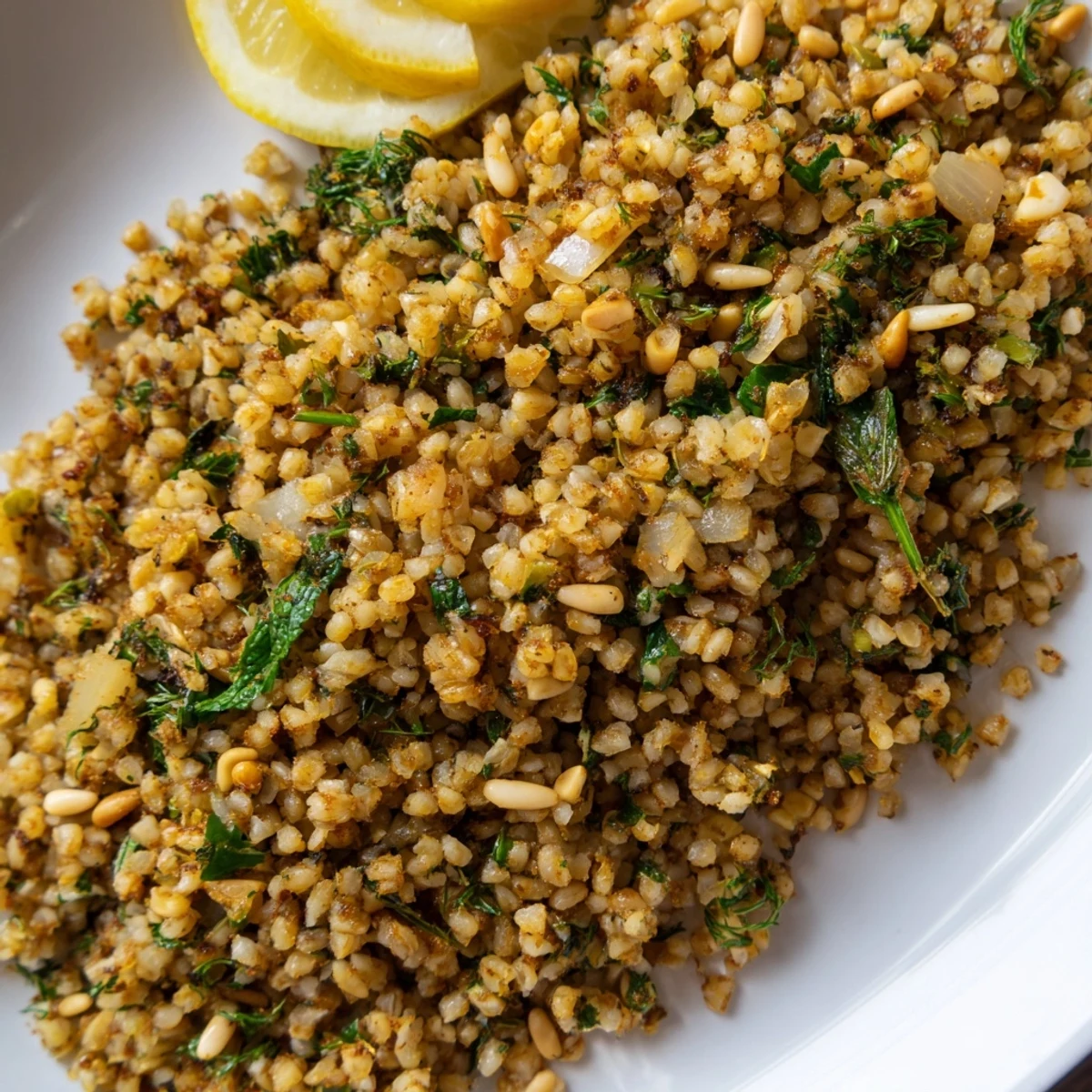
 This dish features bulgur wheat simmered gently with a blend of aromatic spices including cinnamon and allspice. Fresh parsley, dill, and mint are folded in while warm, releasing herbaceous aromas. Toasted pine nuts or almonds add a crunchy garnish, complemented by a fresh squeeze of lemon juice. The pilaf offers a hearty, flavorful option suited for side servings or a wholesome vegetarian main.
There's something about the way a kitchen fills with cinnamon and warm spices that makes everything feel intentional. I discovered this bulgur pilaf on a cool autumn evening when I was searching for something that felt both nourishing and a little bit special—not fancy, just thoughtful. The first time I folded those fresh herbs in while the pilaf was still steaming, the smell nearly knocked me over. It became the kind of side dish I keep coming back to, the one that somehow tastes like comfort and care at the same time.
I made this for a dinner party where everyone was vegetarian, and I was nervous it wouldn't feel substantial enough. The second someone tasted it, something shifted—people went quiet for a moment, then started asking for seconds. It turned out that when you actually pay attention to building flavor through layers of spice and fresh herbs, nobody misses what you left out. That meal taught me that the best side dishes are the ones brave enough to have their own personality.
Ingredients
- Bulgur wheat (1 cup, medium or coarse grind): This is the backbone—it absorbs flavor beautifully and cooks quickly. Medium grind gives you texture without mushiness, and honestly, it feels more substantial than rice in the best way.
- Olive oil (2 tablespoons): Good olive oil is worth it here because it coats every grain and carries the aromatics through the whole dish.
- Onion (1 medium, finely chopped): The foundation of everything good. Don't rush this—let it soften until it's almost translucent and sweet before you move forward.
- Garlic (2 cloves, minced): Just 30 seconds in the pan is all it takes. Any longer and it turns bitter, but those 30 seconds unlock something irreplaceable.
- Vegetable broth (2 cups, low sodium): Low sodium matters because you're seasoning as you go, and store-bought broth can overpower everything else if you're not careful.
- Ground cinnamon (1 teaspoon): This is where the warmth comes from. It should smell like autumn in your kitchen.
- Ground allspice (1/4 teaspoon): A quieter spice that adds depth without announcing itself—it makes people wonder what they're tasting.
- Black pepper and salt (1/2 teaspoon each): Seasoning is personal. Taste as you go and adjust to what feels right for your palate.
- Fresh parsley (1/2 cup, chopped): The green that keeps everything from feeling heavy. Add it while the pilaf is warm so the heat releases all that fresh aroma.
- Fresh dill (1/4 cup, chopped): Dill is sharp and surprising—it cuts through the warmth of the spices and keeps the pilaf feeling alive.
- Fresh mint (1/4 cup, chopped): A whisper of cool brightness that shows up at the very end. Never cook the mint—just fold it in after everything else is done.
- Toasted pine nuts or slivered almonds (2 tablespoons, optional): Toasting them yourself makes all the difference. Buy them raw and give them a minute in a dry pan until they smell incredible.
- Lemon wedges (for serving): Squeeze them over just before eating so the acidity wakes up all those layers of herb and spice.
Instructions
- Start with the aromatics:
- Heat your olive oil in a large saucepan over medium heat, then add the chopped onion. Watch it soften for 3 to 4 minutes until it's translucent and starting to smell sweet—this is the moment when the foundation is ready.
- Build the flavor base:
- Add your minced garlic and let it cook for just 30 seconds. You're not trying to brown it; you just want to release its aroma into the oil.
- Toast the bulgur:
- Pour in the bulgur and stir it around for about a minute so every grain gets coated in that fragrant oil. This step sounds small, but it changes everything about the final texture.
- Wake up the spices:
- Sprinkle in your cinnamon, allspice, black pepper, and salt, then stir and let everything sit for about 1 minute while the spices toast. Your kitchen will smell like a warm hug.
- Add the liquid:
- Pour in your vegetable broth and bring it to a gentle boil. You'll see the surface start to move, but don't let it rage—we want a gentle simmer from here.
- Let it rest:
- Once it's boiling, reduce the heat to low, cover the pan, and let it sit untouched for 12 to 15 minutes. The bulgur will drink up all that broth and become tender without falling apart.
- The five-minute wait:
- Remove the pan from heat while it's still covered and let it sit for 5 minutes. This resting period is where the pilaf finishes cooking in its own steam.
- Fluff and fold in the herbs:
- Use a fork to gently fluff everything, then fold in your fresh parsley, dill, and mint while the pilaf is still warm. The heat will release their aroma and make the whole dish come alive.
- Finish and serve:
- Transfer to a serving platter, scatter with toasted nuts if you're using them, and set out lemon wedges on the side so everyone can squeeze their own.
 Pin This
 I made this for my sister when she was going through a rough patch, and she called me the next day just to say thank you for something that made her feel looked after. That's when I realized that food like this—simple, fragrant, full of intentional flavor—does something beyond filling your stomach. It says, I thought about you.
Why This Pilaf Works as a Main
Most of the time I serve this as a side, but the truth is it's substantial enough to stand on its own if you add a protein—chickpeas, grilled chicken, roasted fish, whatever feels right. The herbs and spices are strong enough that they don't disappear next to something savory. I've also stirred in cooked chickpeas or green peas directly with the herbs, and it transforms into something hearty without losing any of that brightness.
The Secret of Building Warmth Without Weight
The cinnamon and allspice might seem small, but they're doing the real work here. These warm spices create a feeling of comfort without making the dish heavy or overly sweet—they just make everything taste like it's been thought about. The key is not to be shy with them, but also not to go overboard. Toast them in the oil so they open up, and they'll carry that warmth through every grain without taking over.
How to Make This Your Own
This recipe is a framework, not a rule book. Once you understand how it comes together, you can play with it. Trade the parsley for cilantro if you want something brighter and more herbal, or use coriander instead of allspice if you want something earthier. You can add a handful of dried currants or chopped apricots with the broth for a hint of sweetness, or stir in pomegranate molasses at the very end for tang.
- If you find fresh herbs impossible to source, do yourself a favor and wait until you can get them rather than substituting dried—this dish lives or dies by that fresh brightness at the end.
- Toast your own nuts if you can; it takes two minutes and transforms them from okay to incredible.
- Lemon wedges aren't optional—they're the thing that brings everything into focus right before you eat it.
 Pin This
 This is the kind of pilaf that makes ordinary moments feel a little bit special, the one you'll find yourself making over and over because it's simple enough for a Tuesday night but memorable enough for when people you love are sitting at your table. That's the whole point.