
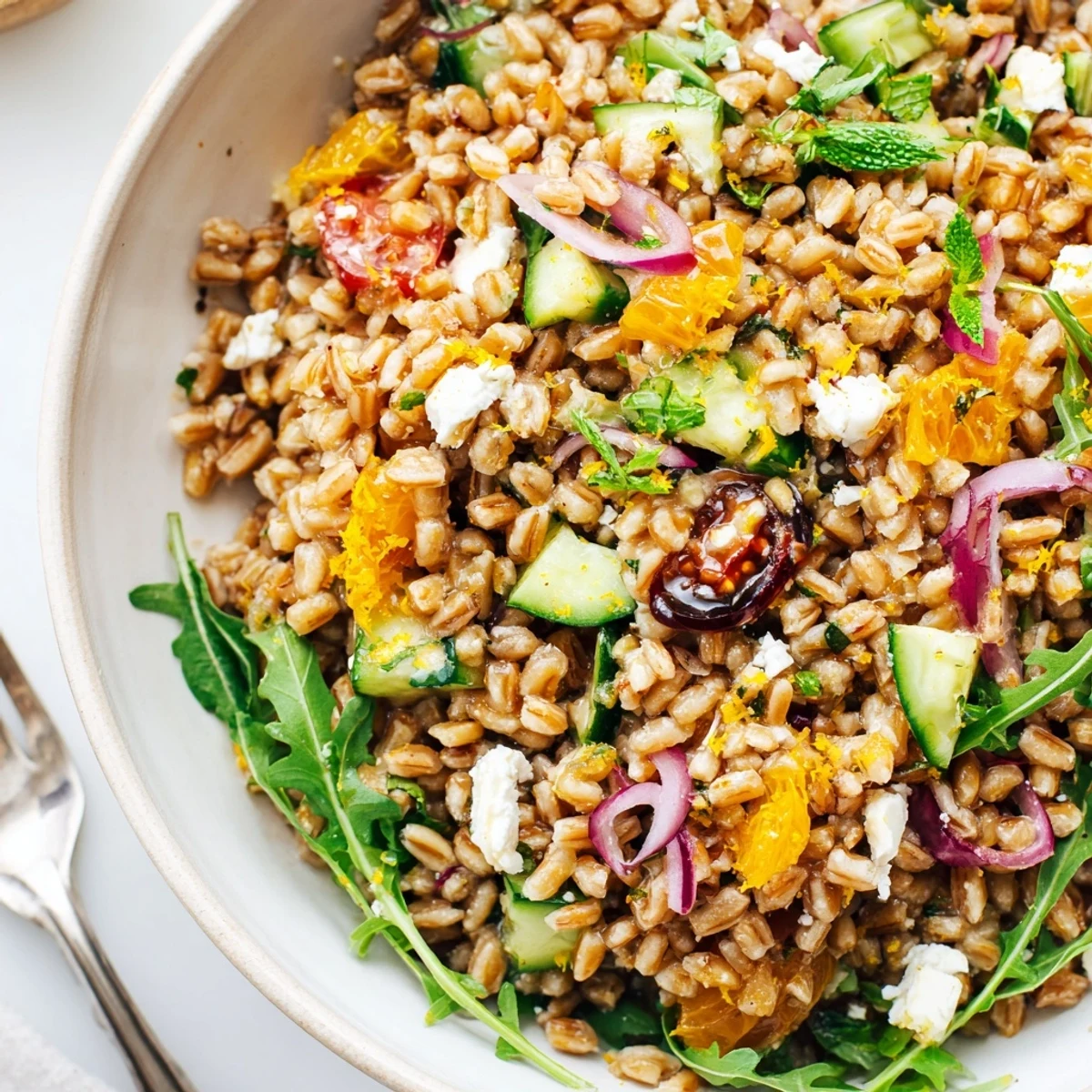
 Pin This
 Cook farro until tender but still slightly chewy, then drain and cool. Whisk olive oil with orange and lemon juices, orange zest, honey and Dijon until emulsified. Toss cooled farro with arugula, cherry tomatoes, cucumber, red onion, parsley and mint; dress and combine. Finish with crumbled feta and toasted pumpkin seeds if desired. Serves 4; about 45 minutes total. Swap quinoa for gluten-free or add grilled protein for heartier bowls.
A few weeks after a spontaneous farmer's market detour, my kitchen was suddenly flooded with handfuls of mint, peppery arugula, and a bag of farro the vendor insisted I try. As the sunlight slanted in, I decided to throw everything together, not expecting the way the citrus in the vinaigrette would brighten up the whole bowl. The zingy smell of orange zest practically announced lunchtime to the entire apartment complex. This dish quickly became my answer to any midweek reset for my palate and mood alike.
I first brought this farro bowl to a Sunday patio brunch, and watched as even my most skeptical friend—who usually dodges salads—went back for seconds. Between the laughter and the clinking of glasses, I realized nobody actually missed the heavier dishes we thought we’d crave. There’s something about the gentle chew of farro mingling with sharp greens and citrus that fits right into conversations that stretch into the afternoon.
Ingredients
- Farro: Nutty and satisfyingly chewy—farro holds up against juicy vinaigrette, but I always rinse it well so it cooks evenly.
- Water: Using filtered water helps the farro’s clean taste shine through, especially if your tap is hard.
- Salt: A little in the cooking water transforms bland grains into an actual flavor base.
- Arugula: Its peppery bite wakes up every forkful; pick the freshest you find to avoid wilted leaves.
- Cherry tomatoes: Halved for juicy pops of sweetness—heirlooms are especially pretty if you can get them.
- Cucumber: Diced for crunch and coolness, English or Persian varieties stay crisp the longest.
- Red onion: Thinly sliced for a sharp kick—soak in cold water for a minute if you want less bite.
- Parsley: Fresh, leafy parsley adds earthy depth and a flash of green.
- Mint: Chopped mint steals the show—too much and it can overpower, so measure with a light hand.
- Extra-virgin olive oil: A grassy oil delivers a smooth backbone for the citrus vinaigrette.
- Orange juice: Fresh-squeezed is key for lively, tangy flavor.
- Lemon juice: Adds tart clarity that perks up every ingredient.
- Orange zest: Essential for that fragrant, almost floral aroma—zest before juicing to avoid struggle.
- Honey or maple syrup: Just a touch takes the sharpness off the vinaigrette—swap to suit your mood.
- Dijon mustard: Whisks all the vinaigrette elements together; more than condiment, it’s the secret anchor.
- Salt and black pepper: Always season vinaigrette to taste; it’s amazing how a pinch changes everything.
- Feta cheese (optional): Crumbled on top, its creamy sharpness brings everything into focus but you can skip for a vegan version.
- Pumpkin seeds (optional): Toasted for extra crunch, they’re my default garnish when I want something toasty.
- Extra citrus zest (optional): A final flourish that makes the flavors pop as you bring it to the table.
Instructions
- Cook the farro:
- Rinse farro thoroughly under cold water, then combine with water and salt in a saucepan. Bring to a boil, simmer gently, and listen for the grains to begin to plump and become tender but still chewy after around 20 to 25 minutes—drain, then cool on a wide plate to speed things up.
- Mix the vinaigrette:
- Whisk olive oil, orange juice, lemon juice, orange zest, honey or maple syrup, and mustard until the mixture goes from separate to silky and golden. Take a moment to inhale—the citrus scent promises what’s to come.
- Combine the greens and vegetables:
- In a roomy bowl, toss arugula, cooled farro, cherry tomatoes, cucumber, onion, parsley, and mint together—use your hands if you like that tactile moment before dressing is added.
- Toss it all:
- Drizzle the citrus vinaigrette generously over the salad, then toss everything gently so each bite glistens. The sound of the leaves and grains moving together is half the pleasure.
- Serve and garnish:
- Scoop into bowls and top with crumbled feta and pumpkin seeds if you wish, then finish with extra zest for maximum brightness. Serve at once for the best crunch and flavor.
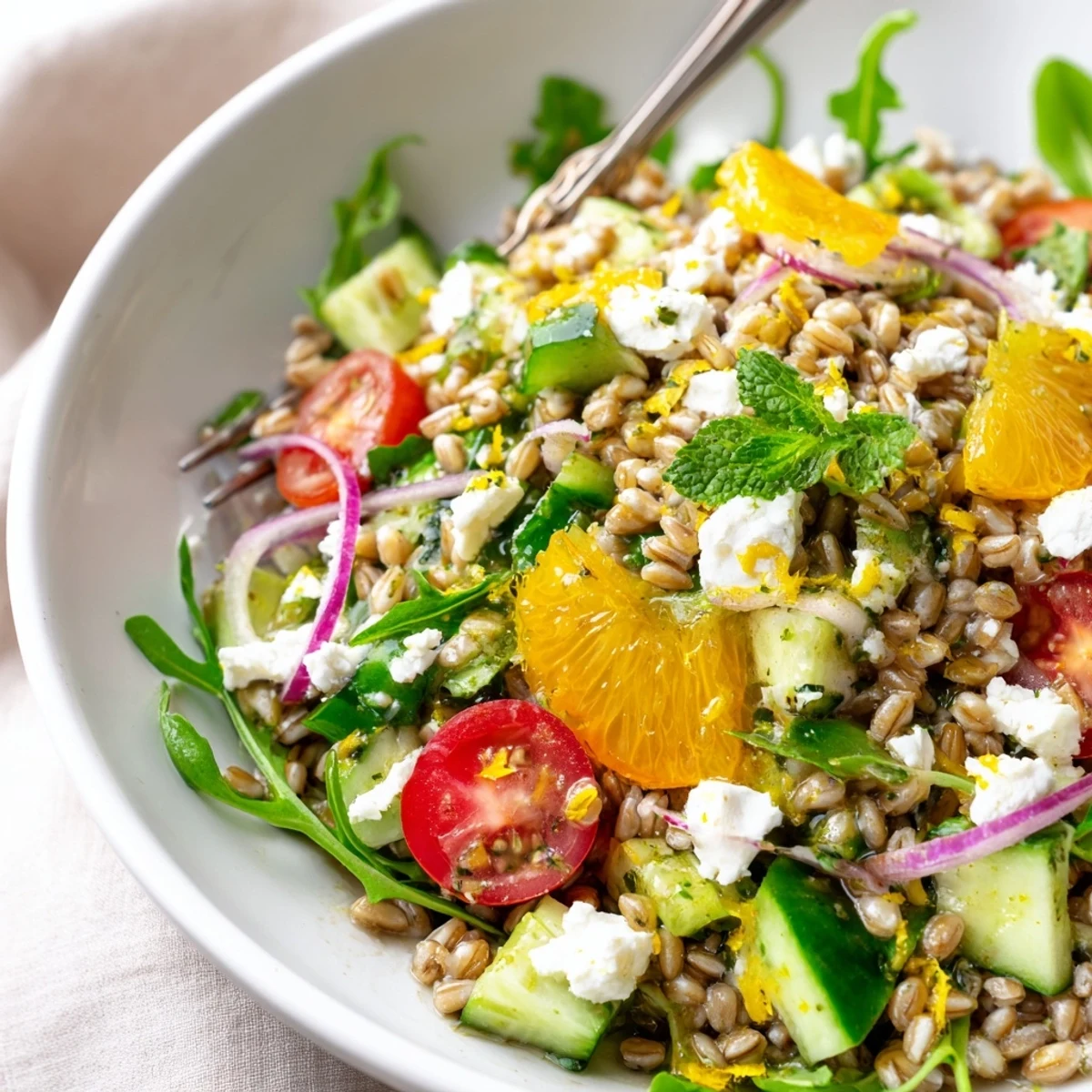 Pin This
 One particularly gloomy Tuesday, I made this bowl just for myself, thinking it would be a silent solo lunch. But by the time I’d whisked together the vinaigrette and caught the scent of mint curling through the warm farro, my neighbor poked her head in, drawn by the aroma—and we ended up chatting and laughing over lunch, turning an ordinary afternoon into a highlight of the week.
Let’s Talk Substitutions
Swapping farro for quinoa or brown rice works beautifully and makes this bowl accessible to anyone avoiding gluten. Don’t be afraid to play with the herbs—dill, basil, or even cilantro offer new twists and subtly shift the personality of your salad. The vinaigrette is forgiving, too, so use what citrus you have and adjust the tartness as you go.
Making It For a Crowd
Doubling or tripling this recipe is easy; just grab your largest mixing bowl. You can prep the components in advance and assemble everything right before serving—if the farro and greens sit together too long, things get soggy. I’ve even served this as a DIY bowl bar, letting guests choose their protein and garnishes on the spot.
What I Wish I Knew The First Time
The first round, I underestimated how much zest lifts everything—now, I always add a little more. Watch the salt levels if you use feta, since it brings extra brininess. And if you like leftovers, keep dressing and greens separate until mealtime for crunch that lasts.
- Stir the vinaigrette again before tossing in case anything settled.
- A sprinkle of fresh herbs right before serving freshens up leftovers.
- Avoid overmixing so those pretty tomatoes keep their shape.
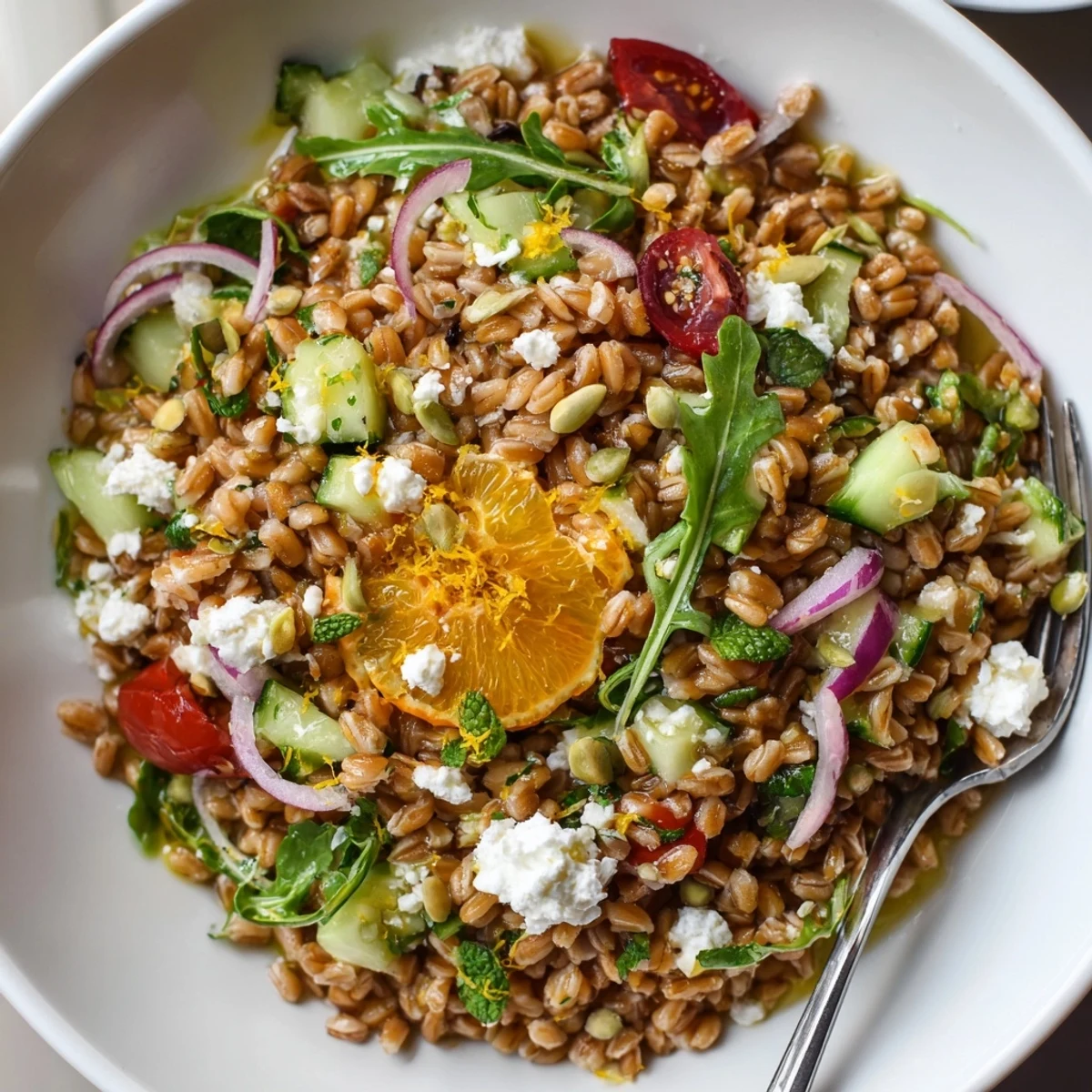 Pin This
 I hope this vibrant bowl brings a little color and energy to your table, too. Sometimes, the simplest meals made with intention turn out to be exactly what the day needed.
Recipe FAQs
- → How do I cook farro so it stays slightly chewy?
-
Simmer farro in simmering water for 20–25 minutes, then drain and let it cool; this preserves a pleasant chew while ensuring tenderness. Avoid overcooking—check for a tender center with a bit of bite.
- → Can I make this ahead of time?
-
Yes. Cook and cool the farro and store the components separately. Keep the vinaigrette chilled and toss everything together just before serving to maintain arugula’s texture and freshness.
- → What gluten-free swaps work best?
-
Substitute quinoa or certified gluten-free brown rice for a similar nutty texture and to keep the dish gluten-free. Adjust cooking times according to the grain chosen.
- → How should I store leftovers?
-
Refrigerate in an airtight container for up to 3 days. If dressed, expect the greens to soften; store dressing separately to keep textures bright. Refresh with a squeeze of citrus before serving.
- → What proteins pair well with this bowl?
-
Grilled chicken, shrimp or pan-seared tofu complement the citrus and herbs. For vegetarian protein, stir in chickpeas or roasted lentils for extra heft and texture.
- → Any tips for balancing the vinaigrette?
-
Taste for acidity and sweetness: add a touch more orange or lemon juice to brighten, or a little honey/maple to round sharpness. Whisk vigorously to emulsify the oil and juices for a silky dressing.