
 Pin This
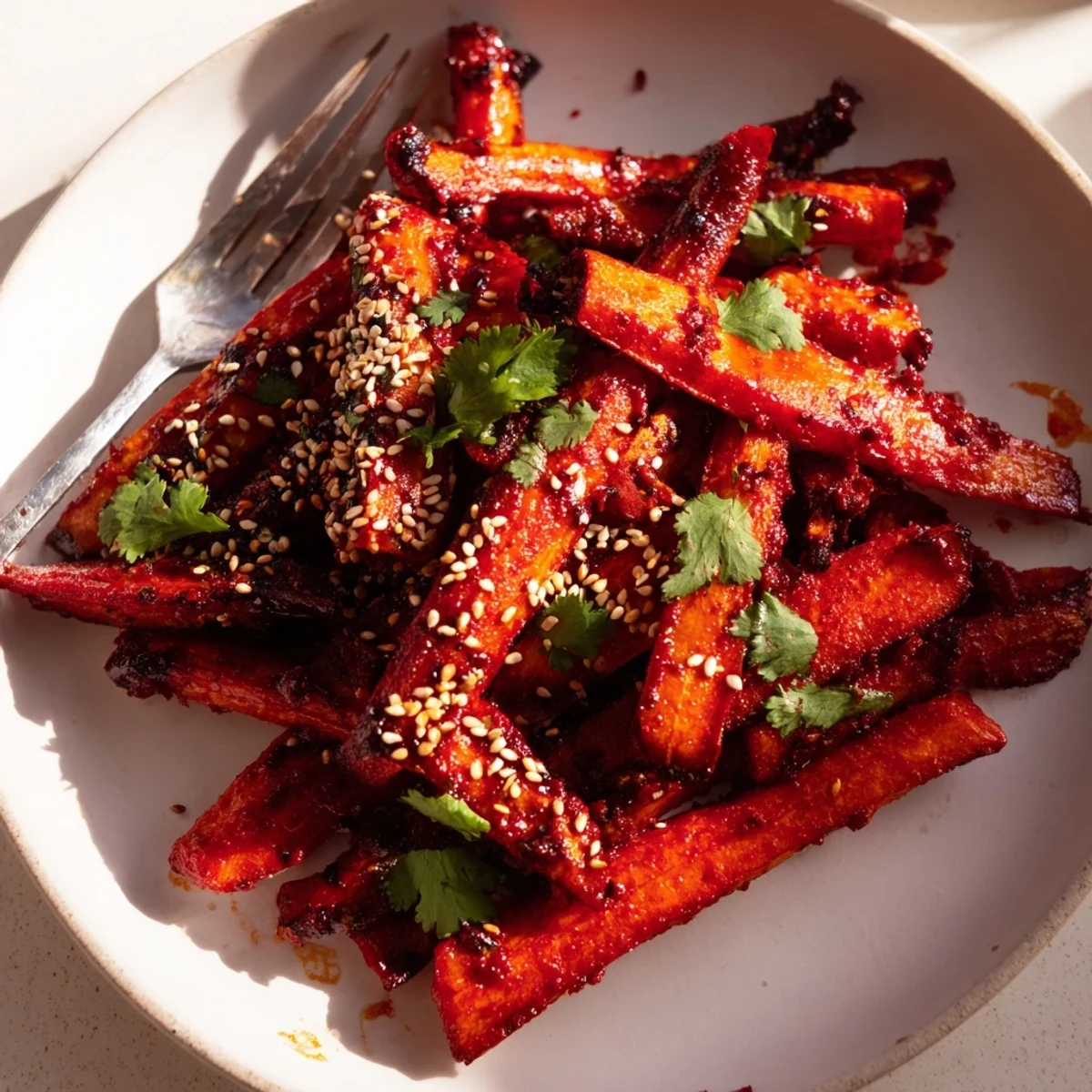
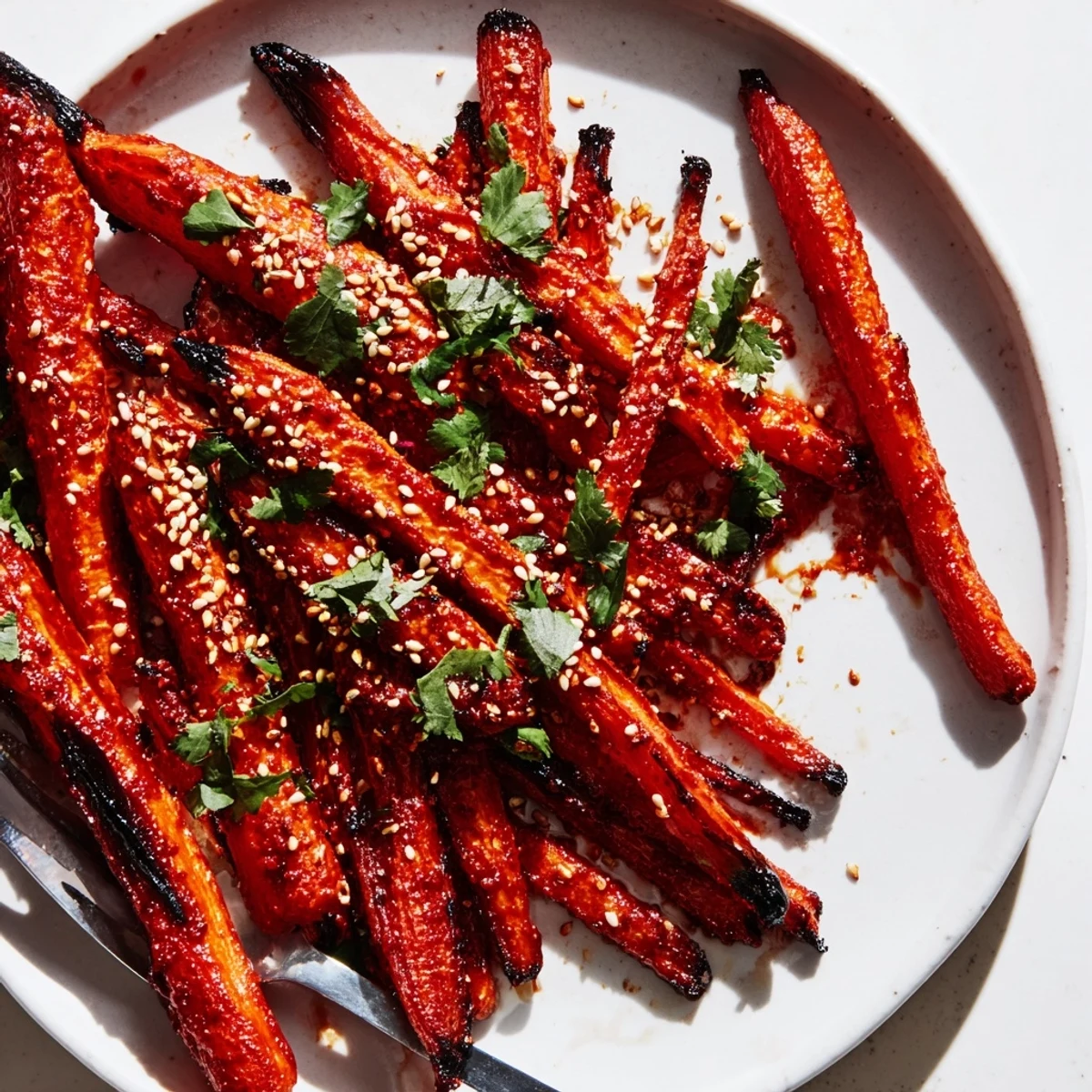
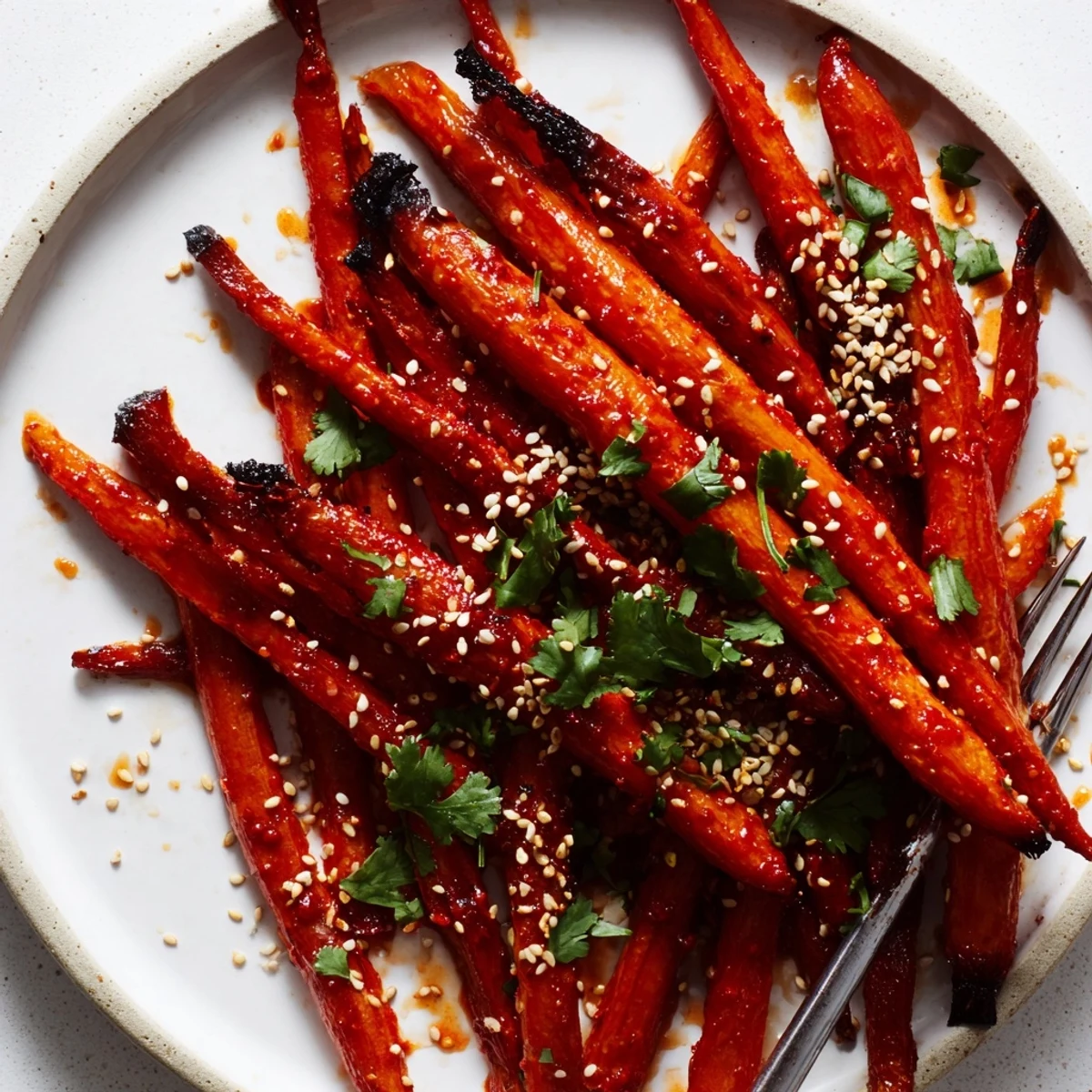
 These harissa roasted carrots offer a smoky, spicy flavor profile with a touch of sweetness from perfectly caramelized edges. Coated in harissa paste, olive oil, smoked paprika, and cumin, the carrots become tender while retaining their vibrant color. Roasting at a high temperature brings warmth and depth, enhanced by optional garnishes like fresh herbs, toasted sesame seeds, or pistachios. Ideal as a vegan, gluten-free side, this dish pairs wonderfully with grilled mains or grain salads, making it a versatile addition to cozy meals.
I discovered harissa roasted carrots on a chilly evening when a friend brought a jar of vibrant red paste to my kitchen, insisting I had to try it. We tossed some carrots in it on a whim, roasted them until they blistered and sweetened, and I realized how a vegetable I'd taken for granted could taste like something entirely new. That moment changed how I think about side dishes—they don't have to be an afterthought.
The first time I made this for a dinner party, I was stressed about the main course, but these carrots sat on the table cooling and somehow they kept disappearing before anything else. Someone grabbed a piece still warm from the pan, and suddenly everyone wanted to know what made them taste so different. That's when I learned that the simplest dishes often make the biggest impression.
Ingredients
- Carrots: Look for ones with good color and firmness, as they'll caramelize better when roasted and develop deeper sweetness at the edges.
- Harissa paste: This North African chile paste is the backbone of the dish—it brings smoky depth and gentle heat that transforms the whole thing.
- Olive oil: Use something you actually like the taste of, since it carries flavor through every bite.
- Smoked paprika: A tablespoon sounds small, but it doubles down on that toasted, slightly smoky quality that makes these carrots sing.
- Ground cumin: Just enough to add warmth without overwhelming the natural carrot sweetness.
- Sea salt and black pepper: These aren't just filler—they brighten and balance everything else.
Instructions
- Prep the oven and pan:
- Heat your oven to 425°F and line a baking sheet with parchment paper so nothing sticks or burns on the bottom. This temperature is hot enough to caramelize the carrots without drying them out.
- Make the marinade:
- In a bowl, whisk together the harissa, olive oil, smoked paprika, cumin, salt, and pepper until it's smooth and looks like a thick paste. Taste it—this is your chance to adjust the heat or seasoning before it touches the carrots.
- Coat the carrots:
- Toss the carrots in the marinade until every piece is covered, making sure nothing sits dry at the bottom of the bowl. You want them to glisten.
- Spread and roast:
- Lay them out in a single layer so they have room to caramelize rather than steam. Roast for 25 to 30 minutes, turning them halfway through so they cook evenly and get blistered on all sides.
- Finish and serve:
- When they're tender and the edges are darkened and crispy, move them to a platter and scatter whatever garnish appeals to you. A squeeze of fresh lemon cuts through the richness beautifully.
 Pin This
 These carrots have become my answer to what happens when you stop treating vegetables as obligations and start treating them like they deserve real attention. That shift in thinking makes cooking feel less like following rules and more like creating something worth sharing.
Building Flavor in Roasted Vegetables
The secret to vegetables that taste like they matter is understanding that roasting isn't just about applying heat—it's about creating conditions where sugars caramelize and edges develop color and crispness. When you roast carrots hot and fast, they stay tender inside while building complexity on the outside. This is why a plain roasted carrot and one coated in spiced paste can taste so different even when the cooking method is identical.
Harissa and the Middle Eastern Spice Cabinet
Harissa shows up in North African and Middle Eastern cooking as a backbone ingredient, and once you understand how it works, you'll start using it in unexpected places. It's not just heat—it's a combination of chiles, garlic, spices, and usually olive oil, which means it brings texture and richness along with its fire. Learning to taste it on its own before mixing it into a dish helps you know when you've got the right amount.
Making This Dish Work at Your Table
These carrots slot into a meal in several different ways, which is part of what makes them so useful. Serve them warm alongside grilled chicken or fish, toss them into a grain salad while still warm, or let them cool and add them to a mezze platter where they sit alongside hummus and olives. You can also roast them a few hours ahead and eat them at room temperature without losing much flavor.
- For a sharper finish, drizzle with a squeeze of fresh lime or lemon just before serving.
- If you can't find harissa paste, blend dried chiles with garlic, oil, and your favorite spices to make a quick version.
- Rainbow or heirloom carrots roast beautifully here and look stunning on the plate.
 Pin This
 Every time I make these carrots, I'm reminded that some of the best dishes come from happy accidents and from paying attention to what ingredients want to do. This is good food that asks very little but gives back generously.
Recipe FAQs
- → What is the best way to roast the carrots evenly?
-
Arrange carrots in a single layer on the baking sheet and toss halfway through cooking to ensure even caramelization.
- → Can I adjust the spiciness of the harissa coating?
-
Yes, adjust the amount of harissa paste to suit your heat preference or add a pinch of chipotle powder for extra smokiness.
- → What garnishes complement the harissa roasted carrots?
-
Fresh cilantro or parsley, toasted sesame seeds or chopped pistachios, and a squeeze of lemon add brightness and texture.
- → Are these carrots suitable for special diets?
-
They are vegan and gluten-free, but be mindful of nuts or sesame in garnishes if allergies are a concern.
- → How can I store leftover harissa roasted carrots?
-
Store in an airtight container in the refrigerator for up to 3 days and reheat gently before serving.