
 Pin This
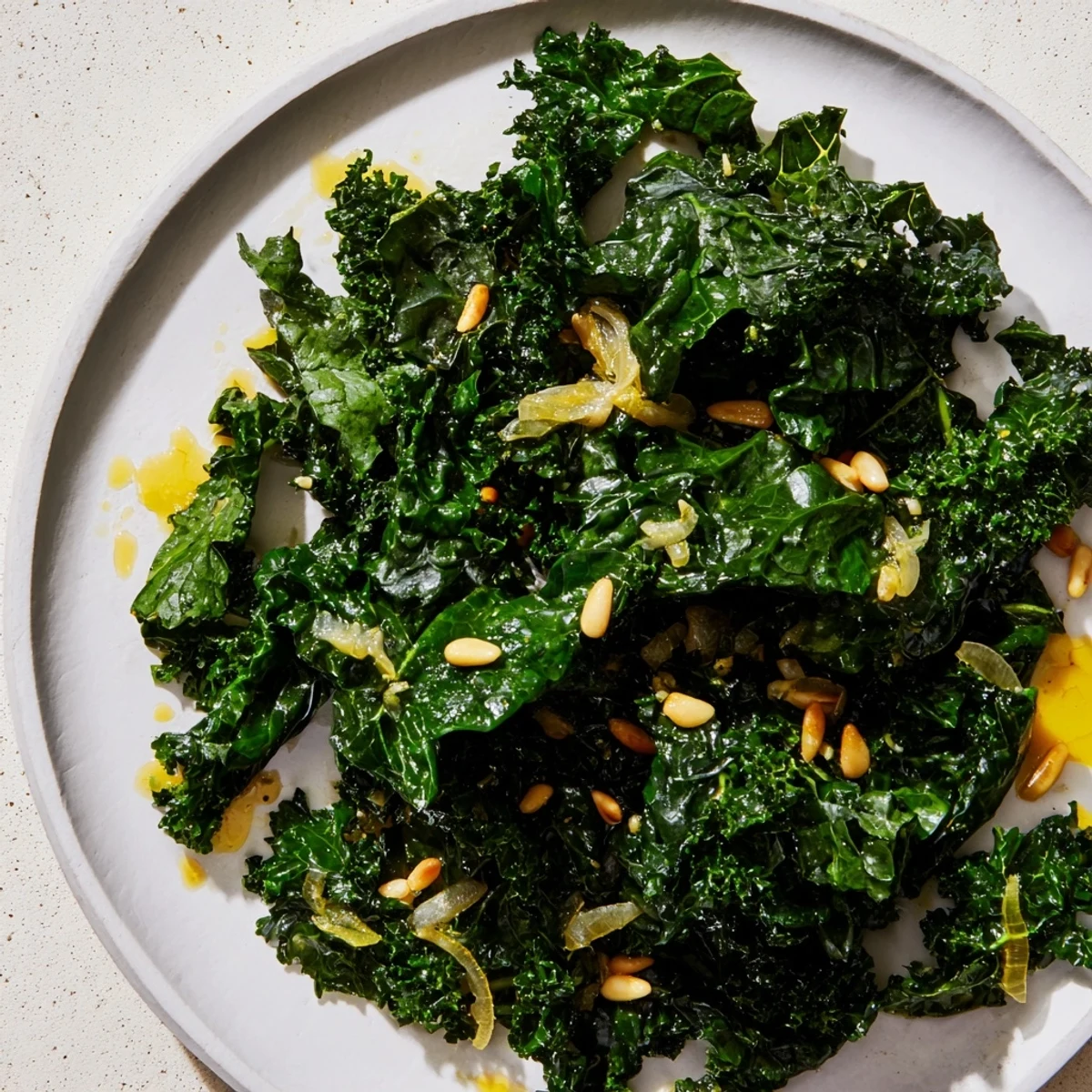
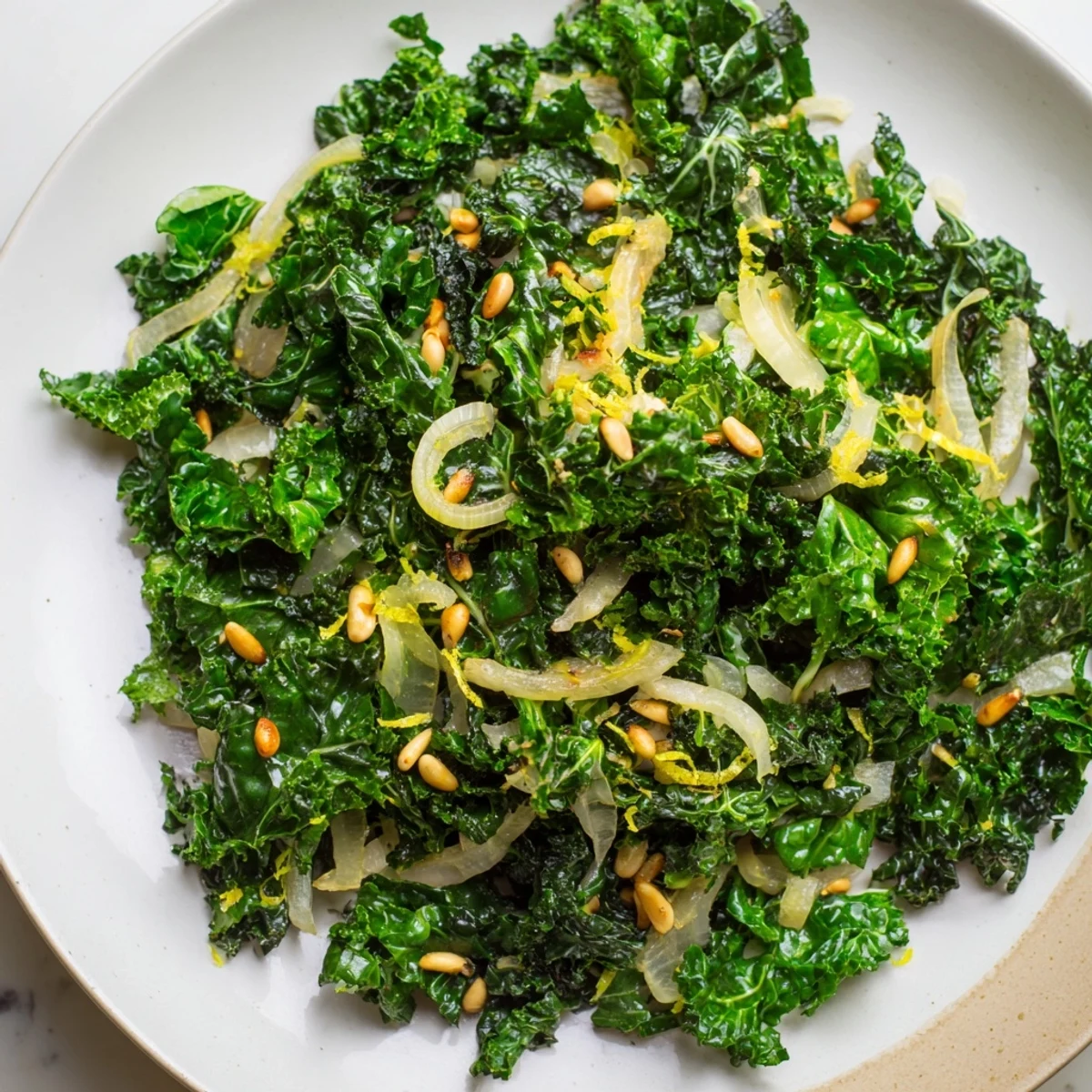
 This warm winter side showcases tender kale sautéed with fragrant garlic and onions, gently baked in a hot skillet to enhance its rustic flavors. Finished with a bright lemon juice drizzle and optional toasted pine nuts for extra crunch, this dish balances softness with crisp edges. Simple to prepare, it’s a perfect complement to roasted meals or grains, delivering a nourishing, vibrant option that’s both vegan and gluten-free.
There's something about the smell of garlic hitting hot oil on a cold evening that just stops you mid-stride. I discovered this kale recipe on one of those nights when I had a cast-iron skillet, half a bunch of greens, and the oven already warming up for something else. What started as a practical side dish became my go-to when I wanted something that felt both effortless and intentional.
I made this for a small dinner party last January, and my friend reached for seconds before the main course was even plated. She said the crispy edges reminded her of roasted vegetables from her grandmother's kitchen, which felt like the highest compliment. That moment reminded me that simple food, made with care, becomes the thing people remember.
Ingredients
- Kale: Use a large bunch with the tough stems stripped away—they'll never soften anyway, so don't waste the effort.
- Yellow onion: Sliced thin so it disappears into sweetness during that first sauté.
- Garlic: Four cloves minced fine; they'll mellow in the oven rather than stay sharp.
- Extra virgin olive oil: The good stuff—this isn't the moment to use the regular kind.
- Sea salt and black pepper: Fresh ground pepper makes a real difference here.
- Red pepper flakes: Optional, but they add a whisper of heat that brightens everything.
- Lemon juice: The final squeeze that pulls all the flavors into focus.
- Toasted pine nuts: A luxury garnish, but walnuts or almonds work beautifully if that's what you have.
Instructions
- Get your oven ready:
- Preheat to 200°C (400°F) and slide a cast-iron skillet or ovenproof baking dish inside to heat. This matters—you want that surface hot so the kale edges crisp up properly.
- Build the base:
- In a large pan over medium heat, warm the olive oil and add your sliced onion. Let it soften for about 3 to 4 minutes, stirring occasionally so it doesn't catch. You're looking for it to turn translucent and start smelling sweet.
- Wake up the garlic:
- Add your minced garlic and stir constantly for just one minute. This is crucial—let it go longer and it'll turn bitter, any shorter and you miss its fragrance entirely.
- Wilt the kale:
- Throw in your chopped kale along with salt, pepper, and red pepper flakes if you're using them. Toss frequently for about 4 to 5 minutes until the kale softens and brightens, turning a more vivid green.
- Transfer to the oven:
- Using oven mitts, carefully pull that hot skillet from the oven and spread the sautéed mixture evenly across the bottom. Return it to the oven immediately.
- Let the oven work its magic:
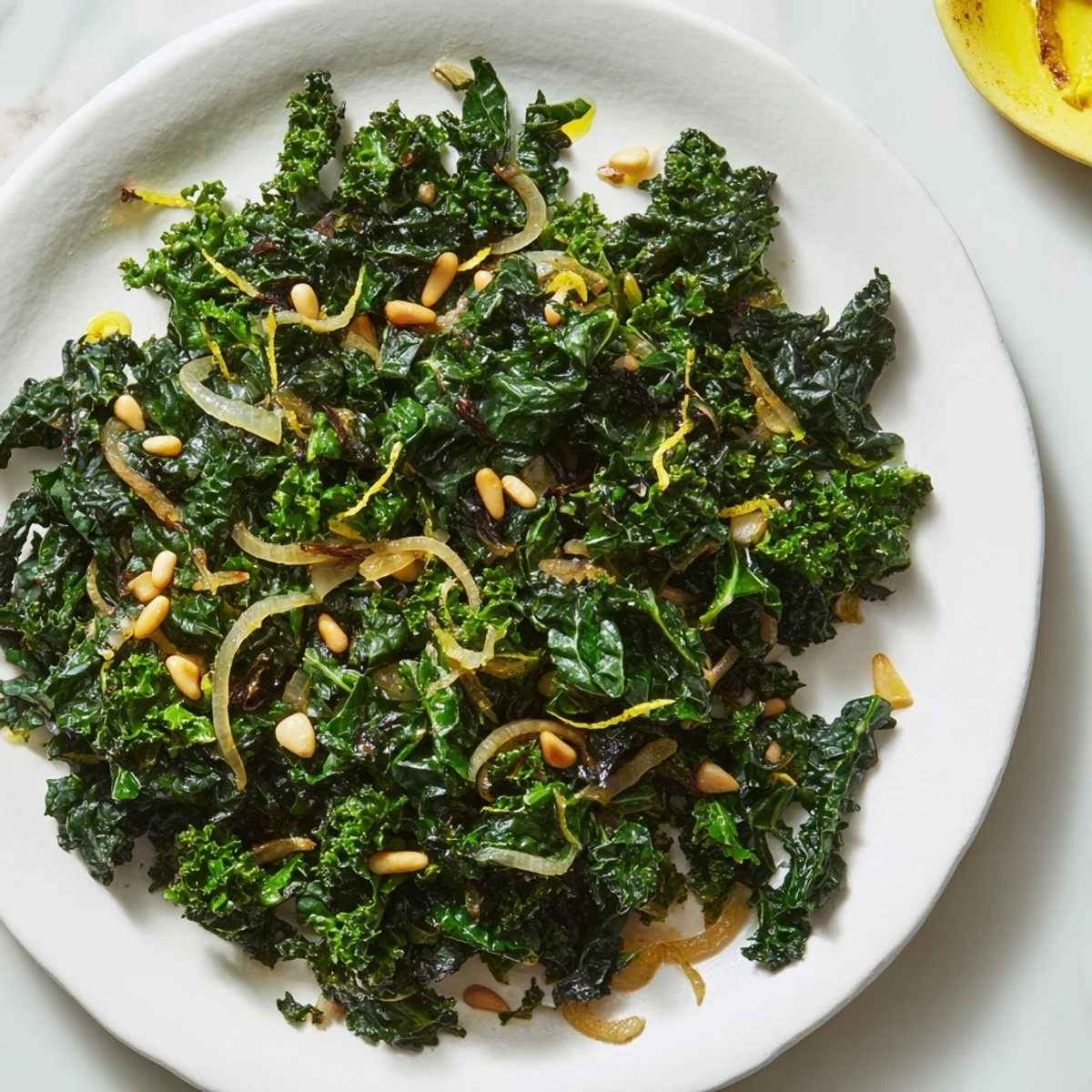
- Bake for 10 to 12 minutes, watching for the edges of the kale to turn slightly crispy and golden. The flavors will deepen and meld while the moisture evaporates.
- Finish and serve:
- Remove from the oven, drizzle with fresh lemon juice, and scatter pine nuts on top if you're using them. Serve right away while everything is still warm and the contrast between crispy and tender is at its peak.
 Pin This
 Winter cooking can feel heavy, but there's something about this kale that feels both grounding and light. Finished with that squeeze of lemon and maybe a scatter of nuts, it stops being a side dish and becomes the thing that makes the whole meal feel complete.
Why Cast Iron Changes Everything
A regular baking dish will get the job done, but cast iron distributes heat so evenly that those kale edges crisp up in a way that's almost impossible to replicate elsewhere. If you don't have cast iron, an ovenproof stainless steel skillet works fine, though you won't get quite the same golden-brown edges that make this dish special.
Building Flavor Through Layers
The magic here isn't in any single ingredient—it's in how they build on each other. The onion sweetens and softens first, then the garlic adds depth without overpowering, the kale brings earthiness, and finally the lemon pulls it all into sharp focus. Each layer matters, and rushing through any step means you'll miss something important.
Variations and Serving Ideas
This dish is endlessly flexible depending on what's already in your kitchen or what you're serving it alongside. Try it under roasted chicken, scattered over grain bowls, or nestled beside fish that could use a boost of character and texture.
- Add nutritional yeast or Parmesan before baking if you want extra umami and richness.
- Swap pine nuts for toasted walnuts, almonds, or even sunflower seeds for a different kind of crunch.
- A tiny pinch of smoked paprika mixed into the kale before roasting adds a subtle depth that surprises people.
 Pin This
 This kale has become my quiet winter ritual, the dish I make when I want something that tastes like you cared but doesn't demand hours in the kitchen. Serve it warm and watch it disappear.
Recipe FAQs
- → What type of kale works best for this dish?
-
Use a large bunch of curly or dinosaur kale, removing tough stems and roughly chopping the leaves to ensure even cooking.
- → Can I substitute pine nuts with other nuts?
-
Yes, toasted walnuts or almonds make excellent alternatives, adding different textures and flavors.
- → How do I prevent kale from becoming soggy during baking?
-
Sauté kale until wilted but still vibrant, then bake briefly so edges crisp without losing texture.
- → Is it necessary to preheat the oven with the skillet inside?
-
Yes, heating the ovenproof skillet before adding the sautéed kale helps develop a rustic, slightly crispy finish.
- → Can I prepare this ahead of time?
-
You can sauté the kale mixture in advance and bake just before serving to maintain freshness and texture.