
 Pin This
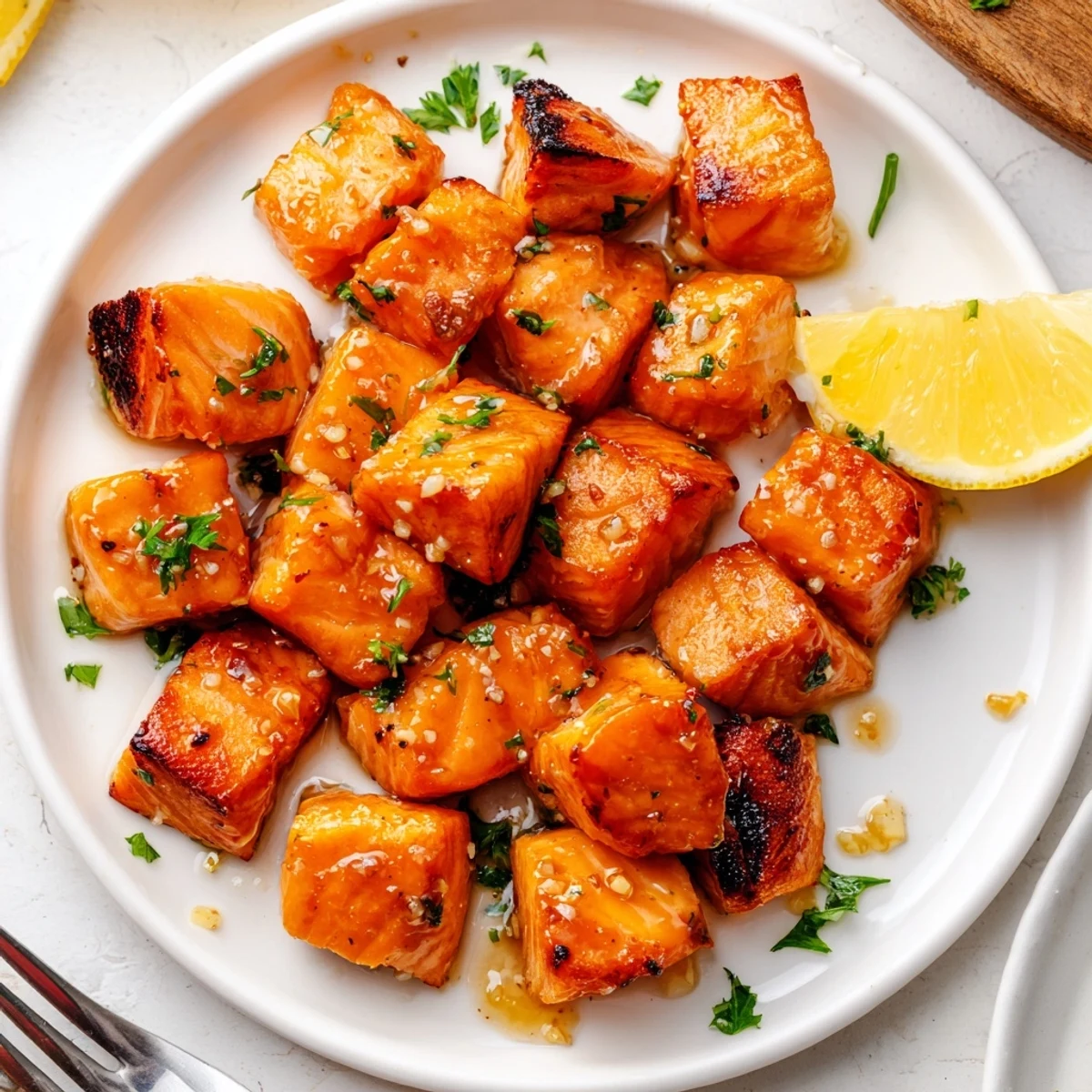
 Cut salmon into 1-inch cubes, pat dry, and season with salt and pepper. Sear in a hot nonstick skillet 1–2 minutes per side until golden and just cooked. Sauté garlic in butter, add lemon zest, juice, honey and soy, and simmer until slightly thickened. Return salmon, toss gently to coat, finish with parsley and lemon wedges. Ready in about 25 minutes for a bright, sticky finish.
The sizzle of salmon hitting a hot pan is one of those sounds that makes everyone in the house wander into the kitchen, pretending they need a glass of water. I stumbled onto these glazed bites during a frantic Tuesday when I had exactly twenty minutes and a lone fillet staring me down from the fridge. That lemon garlic glaze almost did not happen because I was out of my usual go-to condiments and started squeezing whatever was left in the door of the refrigerator. Sometimes the best dishes are born from near-empty pantries and a bit of desperation.
My neighbor Dave appeared at my back door the second I started mincing garlic, holding an empty plate and grinning like a man who had followed his nose across the yard. We ended up standing around the kitchen island eating straight from the skillet with forks, burning our tongues because neither of us could wait for things to cool.
Ingredients
- Salmon: One pound of skinless fillet cut into uniform one-inch cubes ensures even cooking, and patting it dry first is the single most important step for getting that golden sear instead of a steamed mess.
- Kosher salt and black pepper: Just a light seasoning before searing lets the glaze be the star rather than competing with heavy spice.
- Olive oil: Two tablespoons in the pan gives you a high smoke point for that quick hard sear the salmon needs.
- Unsalted butter: Added after searing alongside the garlic, it creates a silky base for the glaze that olive oil alone cannot replicate.
- Garlic: Three cloves minced fine melt into the butter and become sweet and fragrant in seconds, so watch them closely.
- Lemon zest and juice: The zest gives bright perfume while the juice adds tang, and using both makes the flavor layered instead of one-note.
- Honey: Two tablespoons balance the acid from the lemon and help the glaze thicken into a glossy coating that clings to every cube.
- Low-sodium soy sauce: Just one tablespoon adds umami depth without making the dish taste Asian-fusion, and gluten-free tamari works perfectly.
- Red pepper flakes: A tiny pinch is optional but gives a background warmth that makes people wonder what your secret is.
- Fresh parsley: Chopped fine and scattered at the end, it adds color and a fresh bite that cuts through the richness.
- Lemon wedges: For serving, because someone always wants an extra squeeze at the table.
Instructions
- Dry and season the salmon:
- Lay the cubes on paper towels and press firmly on all sides until no moisture remains, then sprinkle with salt and pepper while your pan heats up.
- Mix the glaze:
- In a small bowl, stir together the lemon zest, lemon juice, honey, soy sauce, and red pepper flakes until the honey dissolves, then set it within arm reach of the stove.
- Sear the cubes:
- Heat olive oil in a large nonstick skillet over medium-high heat until it shimmers, then add the salmon in a single layer with space between each cube and sear one to two minutes per side until a golden crust forms.
- Build the garlic butter:
- Transfer the salmon to a plate and drop the heat to medium, then add the butter and minced garlic to the same pan, stirring constantly for about thirty seconds until you can smell it but before it browns.
- Thicken the glaze:
- Pour in your lemon-honey mixture and let it simmer for one to two minutes, stirring and watching as it bubbles and reduces into something syrupy and golden.
- Coat and finish:
- Slide the salmon back into the pan and gently toss everything together for about a minute so each cube gets lacquered, then kill the heat and shower with parsley before serving with lemon wedges alongside.
 Pin This
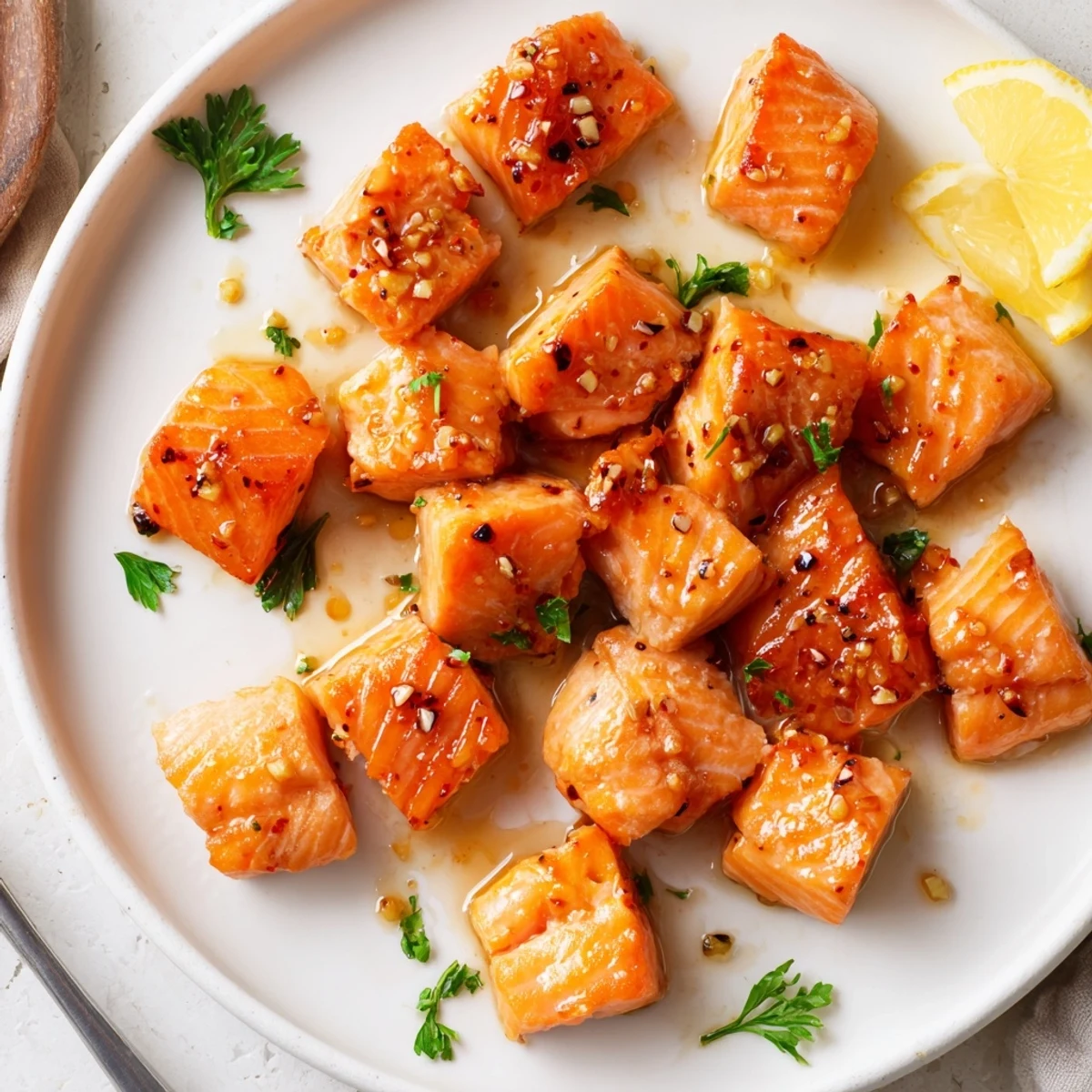
 There is something deeply satisfying about watching a pan of plain fish cubes transform into something glossy and golden that smells like a restaurant kitchen.
Getting That Perfect Sear
The cornstarch trick changed everything for me after a friend who runs a food truck mentioned it offhand at a barbecue. Lightly tossing the salmon cubes in a teaspoon of cornstarch before searing creates an almost imperceptible coating that grabs onto the glaze and holds it tight.
Serving It Your Way
Thread these onto small skewers for a cocktail party and watch them vanish before the first round of drinks arrives. Over a bed of jasmine rice or tucked into a grain bowl with quick-pickled cucumbers, they become a full meal that feels composed but took almost no effort. A glass of Sauvignon Blanc alongside makes the whole thing sing.
Making It Your Own
Swap honey for maple syrup when you want a darker, more autumnal sweetness that pairs beautifully with the garlic. For a dairy-free version, skip the butter and use an extra tablespoon of olive oil, which changes the richness slightly but keeps everything bright and silky. The recipe forgives substitutions gracefully, which is the hallmark of something worth keeping in your rotation.
- Coconut aminos work seamlessly in place of soy sauce if you need to avoid soy entirely.
- A squeeze of lime instead of lemon shifts the whole dish toward a tropical mood that surprises people in the best way.
- Leftovers keep for one day in the refrigerator and are excellent cold straight from the container.
 Pin This
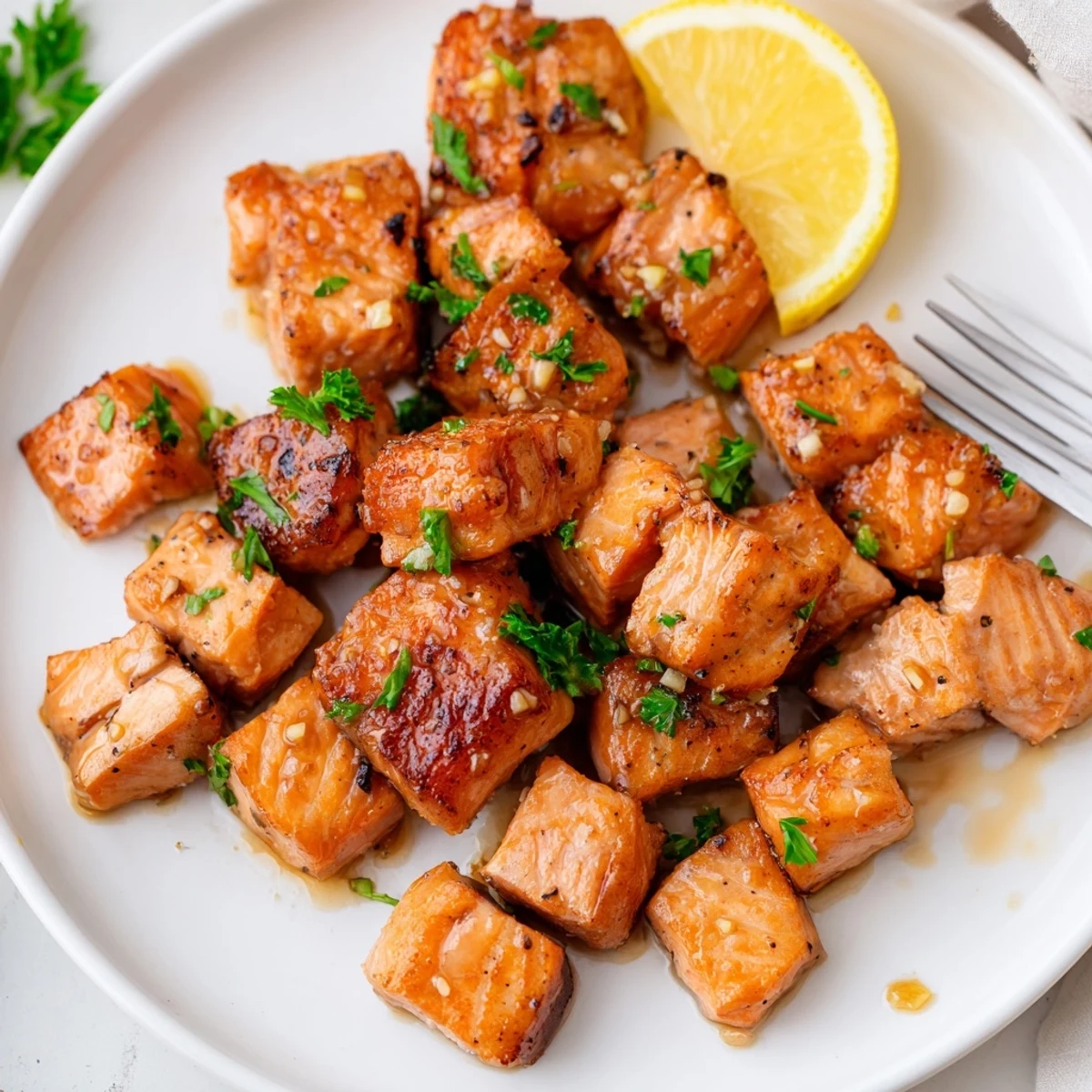
 Keep this one in your back pocket for those evenings when cooking feels like a chore but you still want something that tastes like effort. The pan will tell you when it is ready, and the glaze comes together faster than you can set the table.
Recipe FAQs
- → How do I get a crisp sear on the salmon cubes?
-
Pat the cubes thoroughly dry and heat the pan until shimmering. Use oil with a high smoke point, place pieces in a single layer without crowding, and avoid moving them for 1–2 minutes per side. Lightly dusting with cornstarch helps create extra crispiness.
- → Can I make this without butter or soy?
-
Yes. Substitute butter with extra olive oil for a dairy-free version. Replace low-sodium soy sauce with coconut aminos to keep a similar savory depth while avoiding soy.
- → How can I tell when the salmon is cooked through?
-
Salmon cubes are done when the exterior is golden and the interior is opaque and flakes easily with a fork. With 1-inch cubes, aim for about 1–2 minutes per side over medium-high heat.
- → What are good serving ideas for these glazed bites?
-
Serve as skewered appetizers with toothpicks, over steamed rice, tossed into a salad, or alongside roasted vegetables. A lemon wedge and a sprinkle of fresh parsley brighten the dish.
- → How long can leftovers be stored?
-
Keep cooled leftovers in an airtight container in the refrigerator for up to 2 days. Reheat gently in a skillet over low heat or briefly under a broiler to avoid drying out the salmon.
- → What wine pairs well with the lemon-garlic glaze?
-
A crisp white like Sauvignon Blanc or a light, unoaked Chardonnay complements the citrus and honey glaze, balancing the dish's bright and savory notes.