
 Pin This
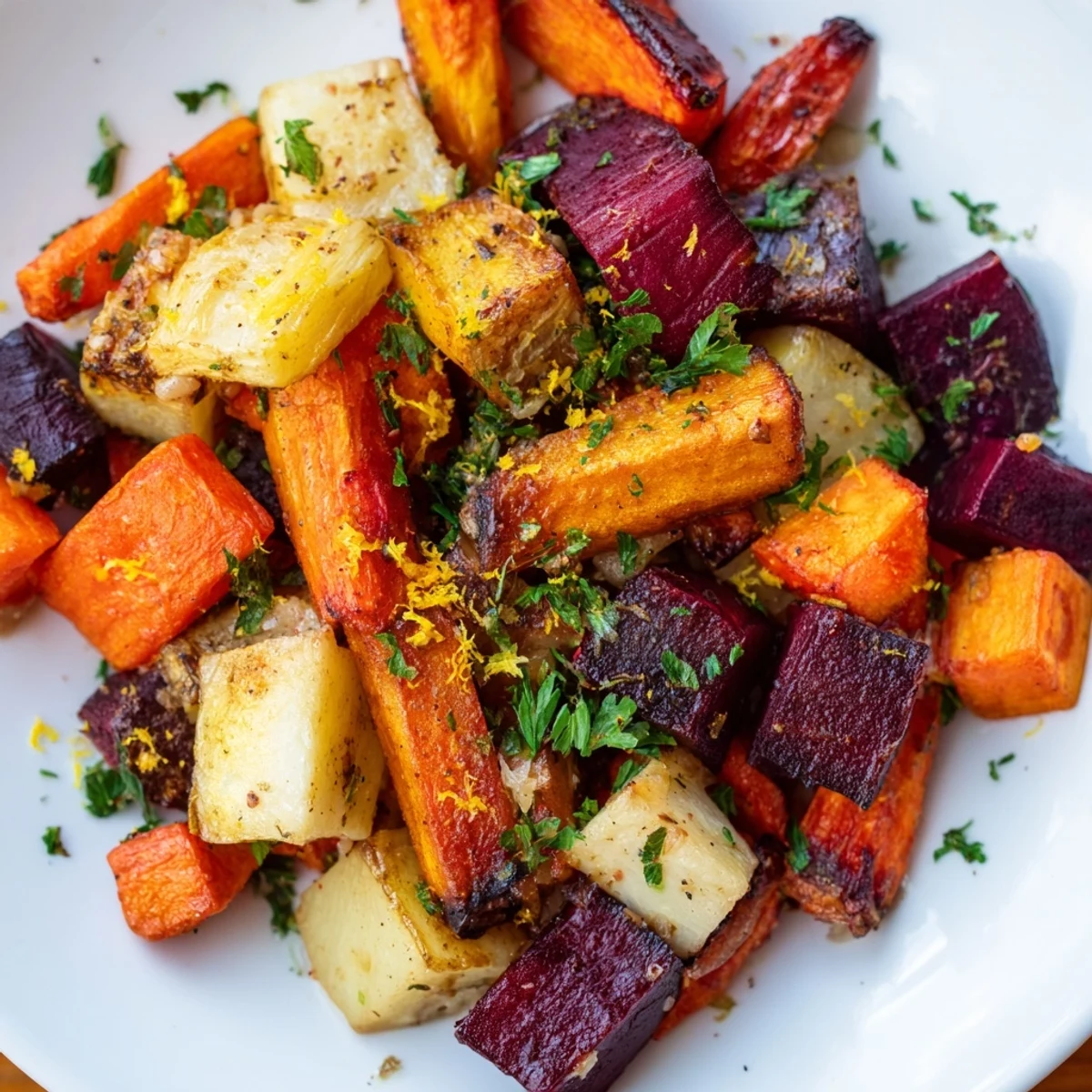
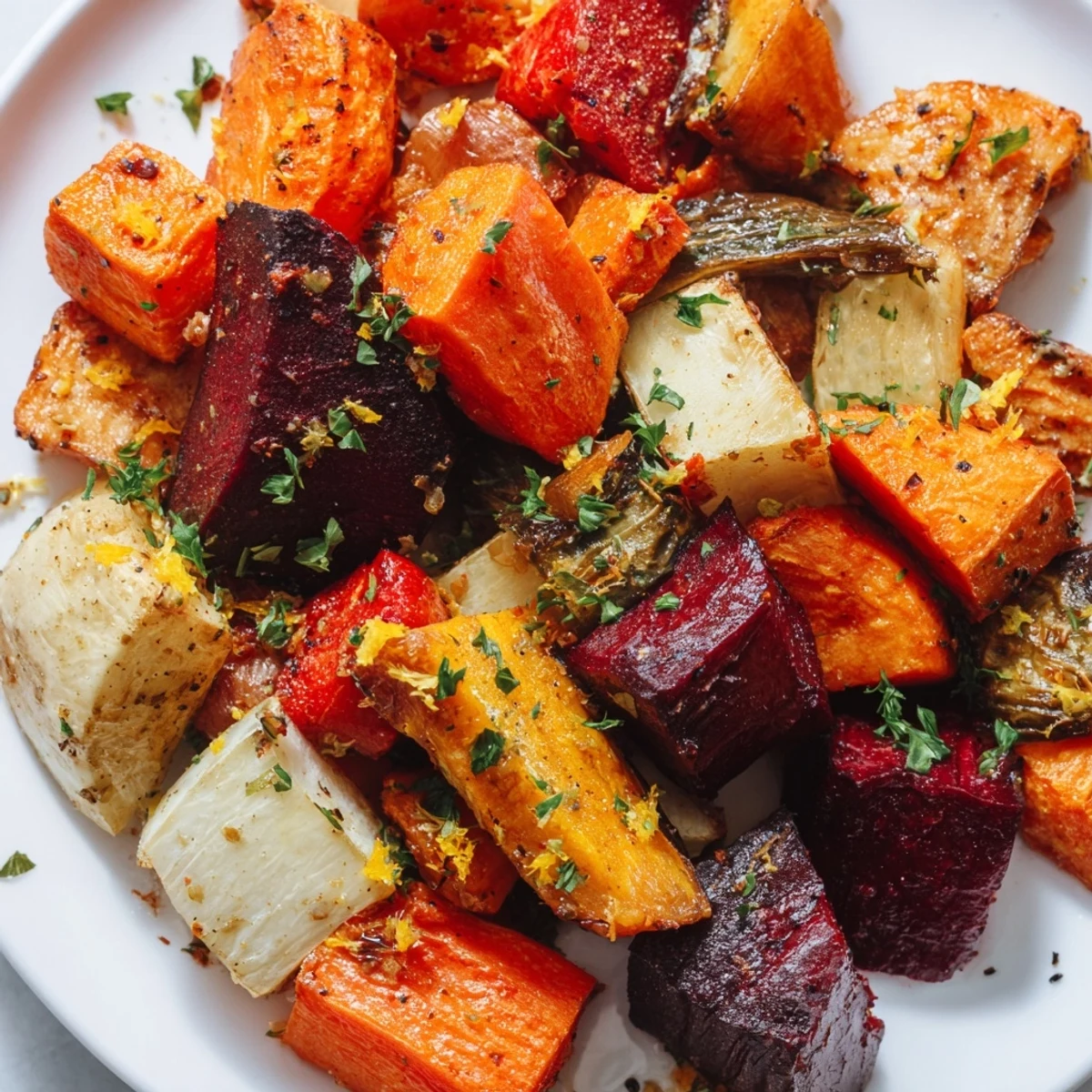
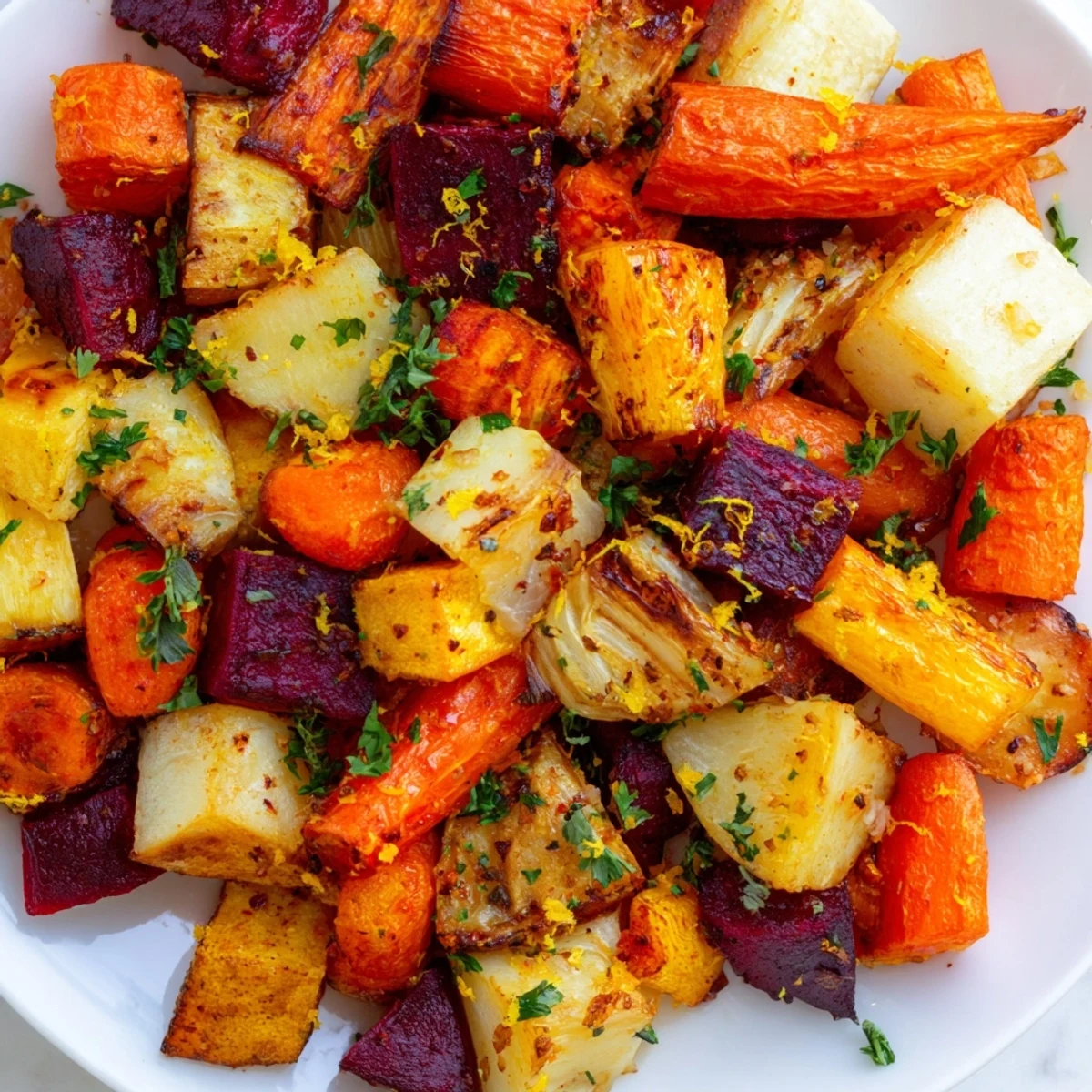
 This colorful mix of root vegetables is roasted to golden tenderness, infused with a blend of garlic, thyme, rosemary, turmeric, and cumin. The heat of the oven brings out their natural sweetness, while fresh parsley and lemon zest add a bright finishing touch. Perfect as a comforting vegetarian main or a satisfying side, this dish balances warming spices with fresh herbs to create a robust flavor profile. Easy to prepare and gluten-free, it highlights the versatility of seasonal root vegetables.
There's something about the smell of root vegetables hitting a hot oven that makes me feel like I'm actually taking care of myself. One winter evening, I was standing in front of my nearly empty vegetable drawer, feeling uninspired, when I pulled out a tangle of carrots, parsnips, and a lonely beet that I'd been meaning to use. Twenty minutes later, my kitchen smelled like a farmer's market mixed with a spice bazaar, and I realized this humble pile of vegetables was about to become something I'd crave all season long.
I made this for a dinner party once when a friend mentioned she was trying to eat more vegetables, and I watched her go back for thirds—thirds of roasted vegetables. She kept saying "these taste like candy" and offering some to everyone else at the table before realizing she'd nearly demolished the whole pan. That's when I knew this recipe was a keeper.
Ingredients
- Carrots and parsnips: These two are the backbone, turning golden and sweet as they roast; parsnips especially develop this almost creamy texture that surprised me the first time.
- Sweet potato, beet, and rutabaga: Each brings different earthiness and color to the pan, but don't skip the beet—it bleeds just enough to make everything look intentional.
- Red onion: Wedges work better than smaller pieces because they soften into caramelized layers rather than disappearing.
- Garlic, olive oil, and spices: The turmeric and cumin are the quiet magic here, adding warmth without making it taste like anything other than itself.
- Fresh herbs and lemon zest: These are optional but worth it—they wake everything up right before serving.
Instructions
- Get your oven ready and prep your vegetables:
- Preheat to 425°F and line your baking sheet with parchment paper so nothing sticks. While it heats, cut everything into roughly 1-inch chunks—consistency matters here because uneven pieces cook at different speeds.
- Build your seasoning coat:
- Whisk together the oil, garlic, salt, pepper, thyme, rosemary, turmeric, and cumin in a small bowl. This mixture is your secret weapon; it coats every piece with warmth and depth.
- Toss and spread:
- Pour the mixture over your vegetables and toss until every piece glistens. Spread them in a single layer on your baking sheet—don't crowd the pan or they'll steam instead of roast.
- Let the oven do the work:
- Roast for 35–40 minutes, giving everything a good stir halfway through. You'll know they're done when the edges are golden brown and caramelized, and a fork slides through the thickest piece.
- Finish with brightness:
- Toss with fresh parsley and lemon zest right before serving to add a fresh, sharp note that cuts through the richness.
 Pin This
 This dish has a way of turning dinner into something intentional. I started making it on nights when I felt scattered, and somehow the act of chopping vegetables and filling my kitchen with that specific warm spice smell became a small ritual that grounded me.
What Makes This Work
The secret is that roasting concentrates the natural sugars in vegetables and creates these crispy, caramelized edges while keeping the insides creamy. The turmeric and cumin don't shout—they just add this subtle golden warmth that makes people ask what the mystery flavor is. It's not complicated, but it's thoughtful.
How to Adapt This Recipe
The beauty of this dish is its flexibility. If you can't find parsnips, celeriac is wonderful. If you're not a beet person, add extra carrots or try sunchokes for earthiness. I've thrown in Brussels sprouts halves and cauliflower florets on nights when I needed more volume or a little textural contrast. The spice blend is flexible too—if you don't have cumin, a pinch of coriander works beautifully instead.
Serving and Leftovers
This works as a standalone vegetarian main, a side dish alongside roast chicken or fish, or tossed warm over grains like quinoa or farro. Leftovers are actually better the next day—the flavors deepen and the texture stays somehow creamy rather than drying out.
- For extra protein, fold in cooked chickpeas before roasting or scatter them on top at the end.
- A drizzle of tahini or yogurt sauce right before serving adds richness and a cooling counterpoint to the spices.
- Toss leftovers into a grain bowl, layer them in a wrap, or eat them straight from the fridge as a snack.
 Pin This
 This recipe became my answer to the question "what do I cook when I want something nourishing but not fussy?" It's proof that simple ingredients, when treated with a little attention and warmth, become something worth gathering around.
Recipe FAQs
- → What types of root vegetables are used?
-
Carrots, parsnips, sweet potato, red beet, and rutabaga or turnip create a hearty, colorful blend.
- → How are the spices balanced in the dish?
-
Aromatic herbs like thyme and rosemary combine with warming turmeric and cumin for a subtle, earthy flavor.
- → Can I prepare this ahead of time?
-
Yes, toss vegetables with oil and spices in advance to enhance flavors before roasting.
- → What garnishes complement the vegetables?
-
Chopped fresh parsley and lemon zest add brightness and fresh herbal notes at the end.
- → Are there suggestions to boost protein content?
-
Adding cooked chickpeas before roasting offers a protein-rich twist while maintaining flavor harmony.