
 Pin This
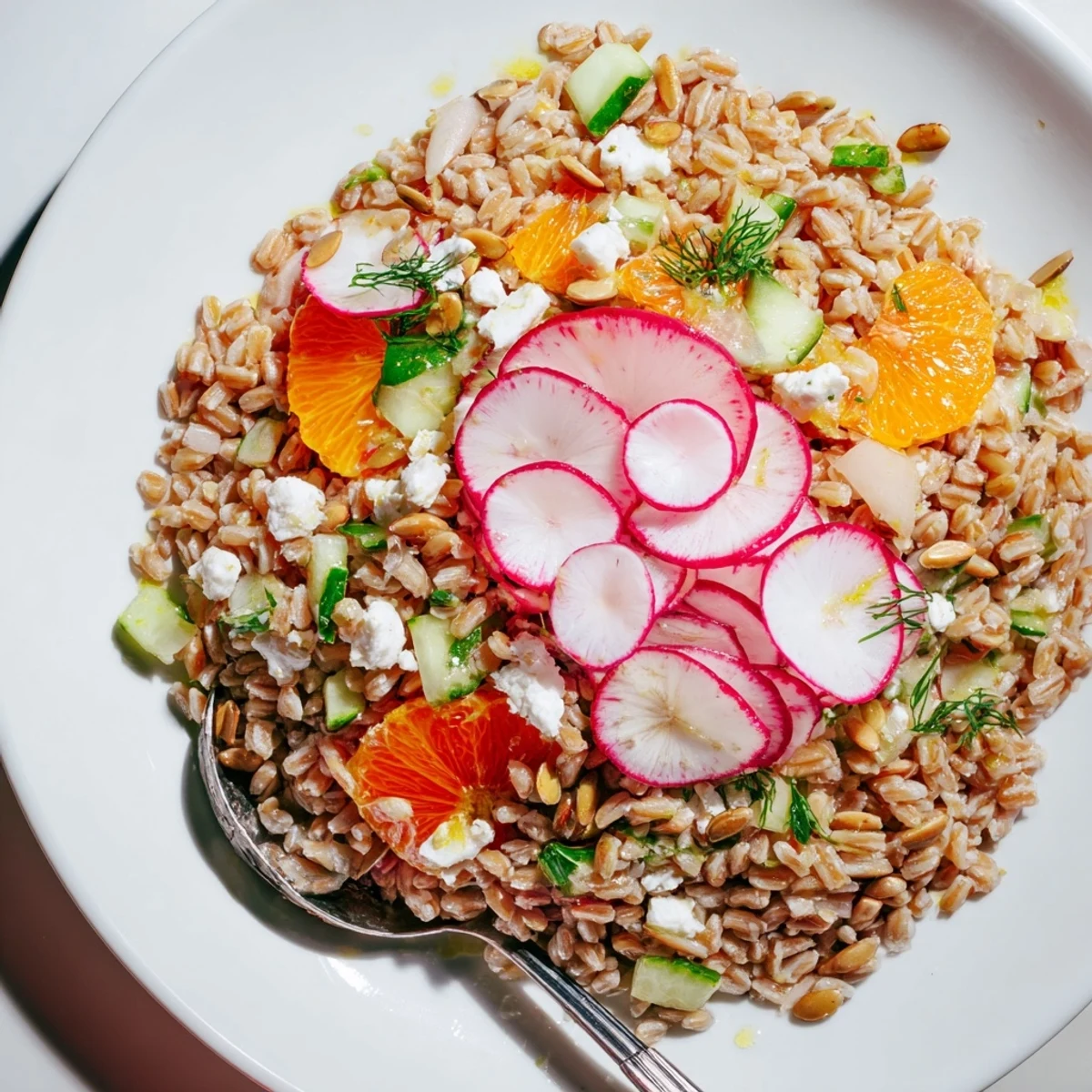
 Cook farro until tender but chewy (20–25 minutes), rinse to cool, then toss with thinly sliced radishes, diced cucumber, orange segments and chopped shallot. Whisk olive oil, lemon and orange juice, honey and Dijon into a bright vinaigrette; fold in parsley, mint and dill. Finish with crumbled feta and toasted pumpkin seeds if desired. Serve chilled or at room temperature; total time about 40 minutes.
A farmers market on a humid Saturday morning handed me this salad, though I did not know it yet. A vendor slid a bag of watermelon radishes across the table and said they were too pretty to cook. By the time I got home, the idea had already assembled itself in my head.
I brought a big bowl of this to a rooftop potluck last summer and watched three people ask for the recipe before they even finished their first plate. One friend stood over the bowl with a spoon, eating it straight, claiming she was quality testing. The radishes were gone within twenty minutes.
Ingredients
- 1 cup uncooked farro: The chewy, nutty backbone of the whole dish, so do not skip rinsing it first to remove any dusty coating.
- 3 cups water: Plenty of water keeps the grains moving freely while they cook.
- Half teaspoon salt: Added to the cooking water so the farro absorbs seasoning from the inside out.
- 6 to 8 radishes, thinly sliced: Their peppery crunch is the contrast this salad needs, and slicing them thin matters more than you think.
- 1 small cucumber, diced: Cool and watery in a way that balances the assertive grains and sharp dressing.
- 1 orange, segmented and cut into bite sized pieces: Sweet bursts of citrus that surprise you in the best way.
- 1 small shallot, finely chopped: Gentler than red onion but still brings a sharp bite that wakes everything up.
- Quarter cup fresh parsley, chopped: A grassy, clean flavor that ties the Mediterranean feel together.
- 2 tablespoons fresh mint, chopped: Just enough to make each bite feel a little brighter and more alive.
- 1 tablespoon fresh dill, chopped: An unexpected note that makes people stop and wonder what is in here.
- Quarter cup extra virgin olive oil: Use the good stuff here since the dressing is raw and the flavor really comes through.
- 2 tablespoons fresh lemon juice: Acidity is what makes this salad sing, so do not be shy with it.
- 1 tablespoon fresh orange juice: Rounds out the lemon and echoes the orange segments already in the bowl.
- 1 teaspoon honey or maple syrup: A tiny bit of sweetness that tames the vinegar edge without making it sweet.
- 1 teaspoon Dijon mustard: Acts as the emulsifier so your dressing actually stays mixed.
- Salt and freshly ground black pepper: Season at the end and taste before serving, because the feta adds salt too.
- Quarter cup crumbled feta cheese (optional): Salty, creamy crumbles that turn this from a side into a meal.
- 2 tablespoons toasted pumpkin seeds (optional): A quiet crunch that most people will not expect but everyone will notice.
Instructions
- Cook the farro until chewy:
- Rinse the farro under cold water, then combine it with the water and salt in a medium saucepan. Bring it to a boil, reduce the heat, and let it simmer uncovered for 20 to 25 minutes until tender but still has a satisfying bite. Drain and rinse under cold water to stop the cooking and cool it down.
- Build the salad base:
- In a large bowl, combine the cooled farro with the sliced radishes, diced cucumber, orange segments, and chopped shallot. Toss gently so the orange pieces do not break apart.
- Whisk the vinaigrette:
- In a small bowl or a jar with a tight lid, combine the olive oil, lemon juice, orange juice, honey, Dijon mustard, salt, and pepper. Shake or whisk vigorously until the dressing looks creamy and unified, not separated.
- Dress and toss:
- Pour the vinaigrette over the salad, add the parsley, mint, and dill, and fold everything together with a gentle hand. Taste a grain of farro and adjust salt or lemon if it needs more punch.
- Finish and serve:
- Sprinkle with feta and toasted pumpkin seeds if you are using them. Serve it chilled or at room temperature, though honestly it disappears fast either way.
 Pin This
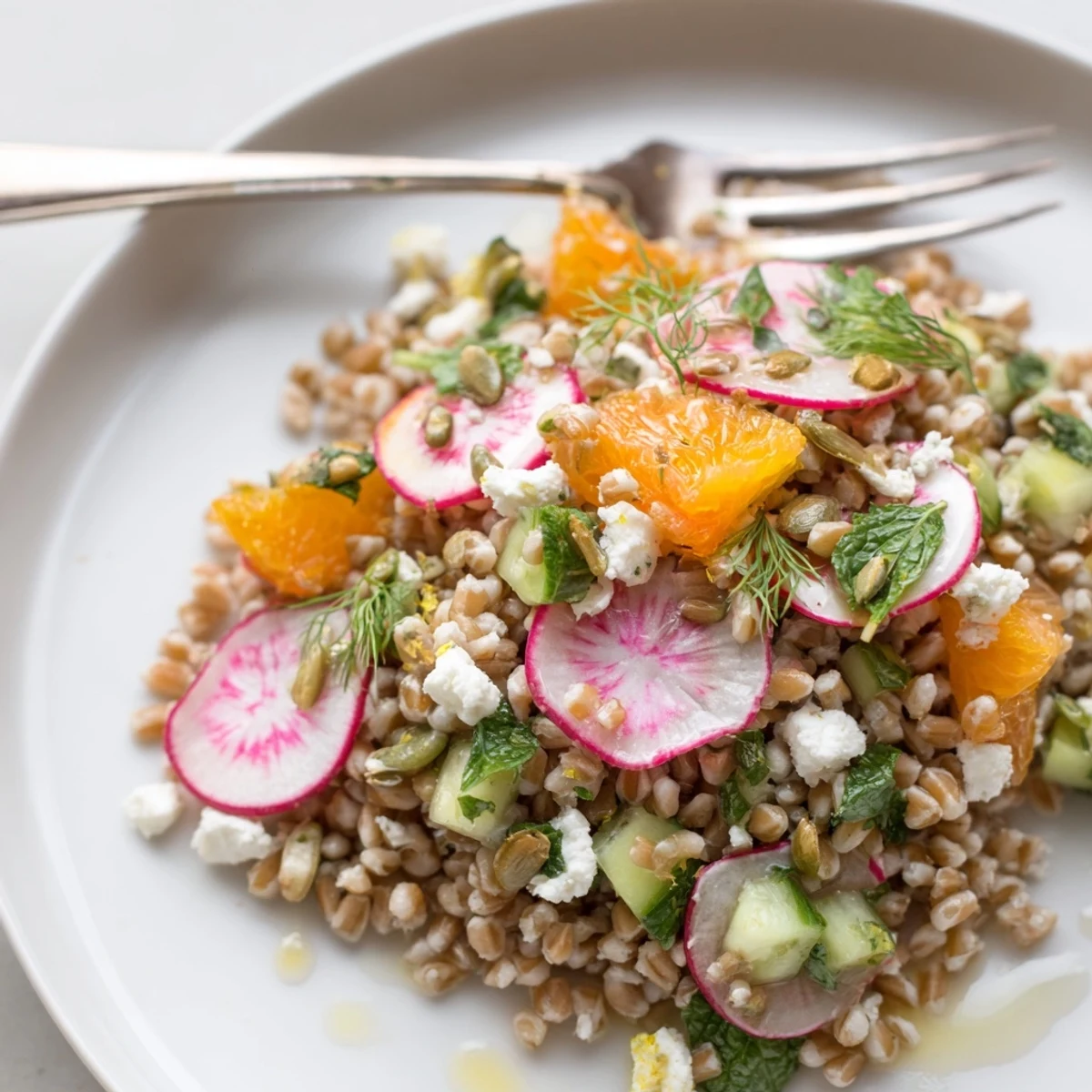
 There is something about a salad that does not try to be healthy, it just is. This one earned a permanent spot in my weeknight rotation after a neighbor knocked on my door to return a plate and casually asked if I had any more of that grain thing.
Swapping the Grains
Farro has a chew that is hard to replicate, but pearl barley gets close if that is what you have. For a gluten free version, quinoa works well, though the texture shifts from chewy to fluffy and the salad becomes a different but still wonderful thing. Just adjust the cooking time to whatever grain you choose and taste as you go.
Making It a Full Meal
A handful of chickpeas drained from a can and tossed in with everything else turns this into something genuinely filling without much effort. Sliced avocado on top adds creaminess that the feta already hints at. Grilled chicken works too, but honestly this salad does not need help being satisfying.
What to Serve Alongside
A glass of crisp Sauvignon Blanc alongside this salad on a warm evening is the kind of pairing that makes you feel like you planned something fancy when you did not. Sparkling water with a wedge of lemon does the same job on a Tuesday. The salad is versatile enough to sit next to grilled fish, roasted vegetables, or nothing at all.
- Toast thick slices of sourdough and rub them with a cut garlic clove for an easy companion.
- A dollop of hummus on the side turns the whole plate into a lazy, excellent lunch.
- Remember to taste the salad one last time before serving, because a squeeze of lemon at the end can change everything.
 Pin This
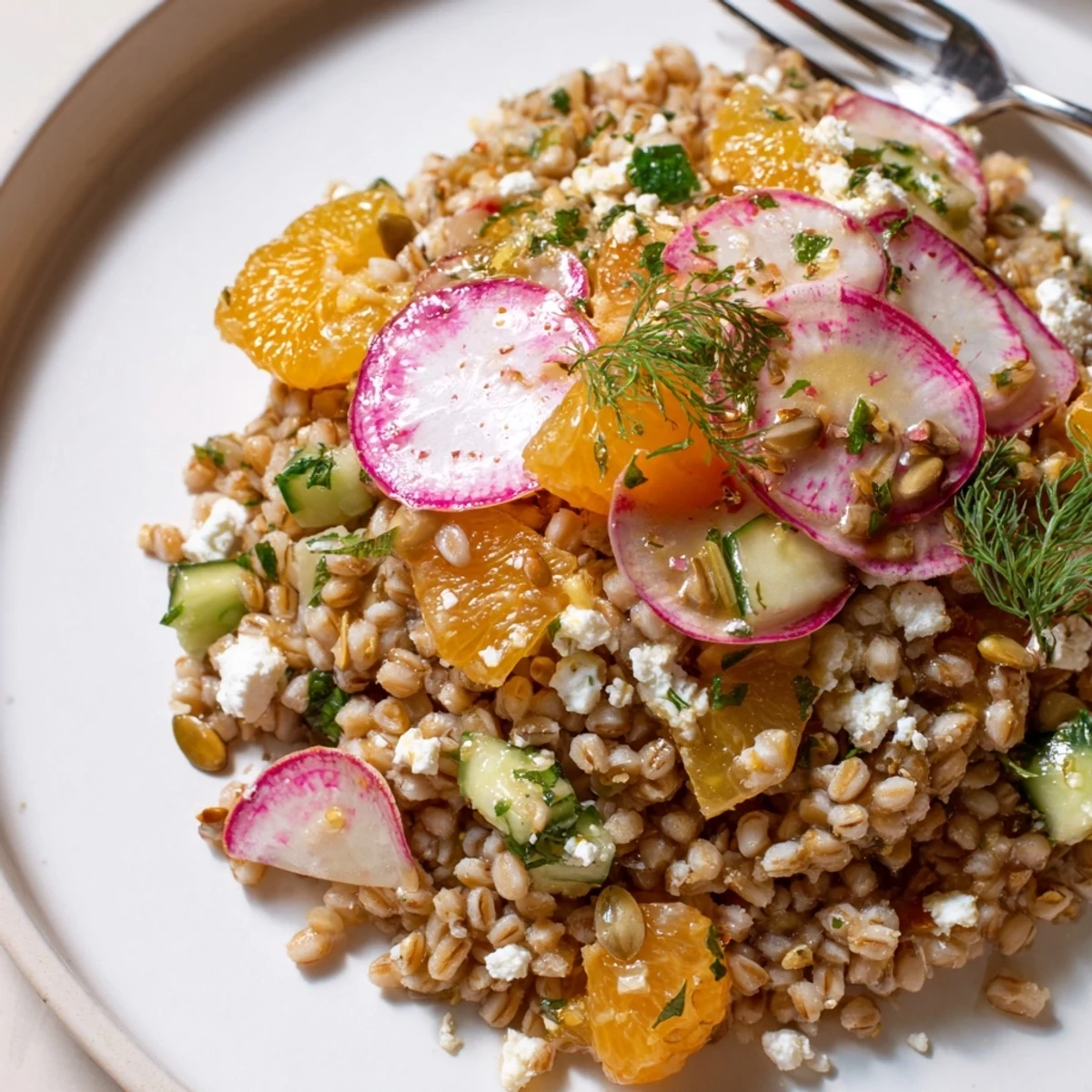
 This salad tastes like the kind of afternoon where you have nowhere to be and nothing urgent to do. Make it once and it will show up in your kitchen again and again without being asked.
Recipe FAQs
- → How long should I cook farro for the best texture?
-
Simmer pearled farro for about 20–25 minutes until tender but still slightly chewy. Drain and rinse under cold water to stop cooking and keep the grains separate.
- → Can I make this ahead of time?
-
Yes. Cook and cool the farro, then store dressed or undressed in the fridge up to 24 hours. If dressed early, the grains will absorb more dressing—reserve some dressing to refresh before serving.
- → What are good gluten-free swaps for farro?
-
Use quinoa for a quick gluten-free option or cooked buckwheat for a chewy texture. Adjust cooking times: quinoa cooks faster, while buckwheat needs rinsing and shorter simmering.
- → How can I adjust the dressing for less sweetness?
-
Reduce or omit the honey/maple syrup and increase lemon juice slightly. A touch more Dijon helps with emulsification and adds savory balance without sweetness.
- → Which herbs work best if I don’t have fresh mint?
-
Increase parsley and dill for bright, herbal notes, or add a small amount of basil for a different aromatic profile. Fresh herbs are best; dried herbs will be less vibrant.
- → What protein additions pair well with these flavors?
-
Grilled chicken, pan-seared salmon or chickpeas complement the citrus-herb components. Avocado adds creaminess while keeping it vegetarian-friendly.