
 Pin This
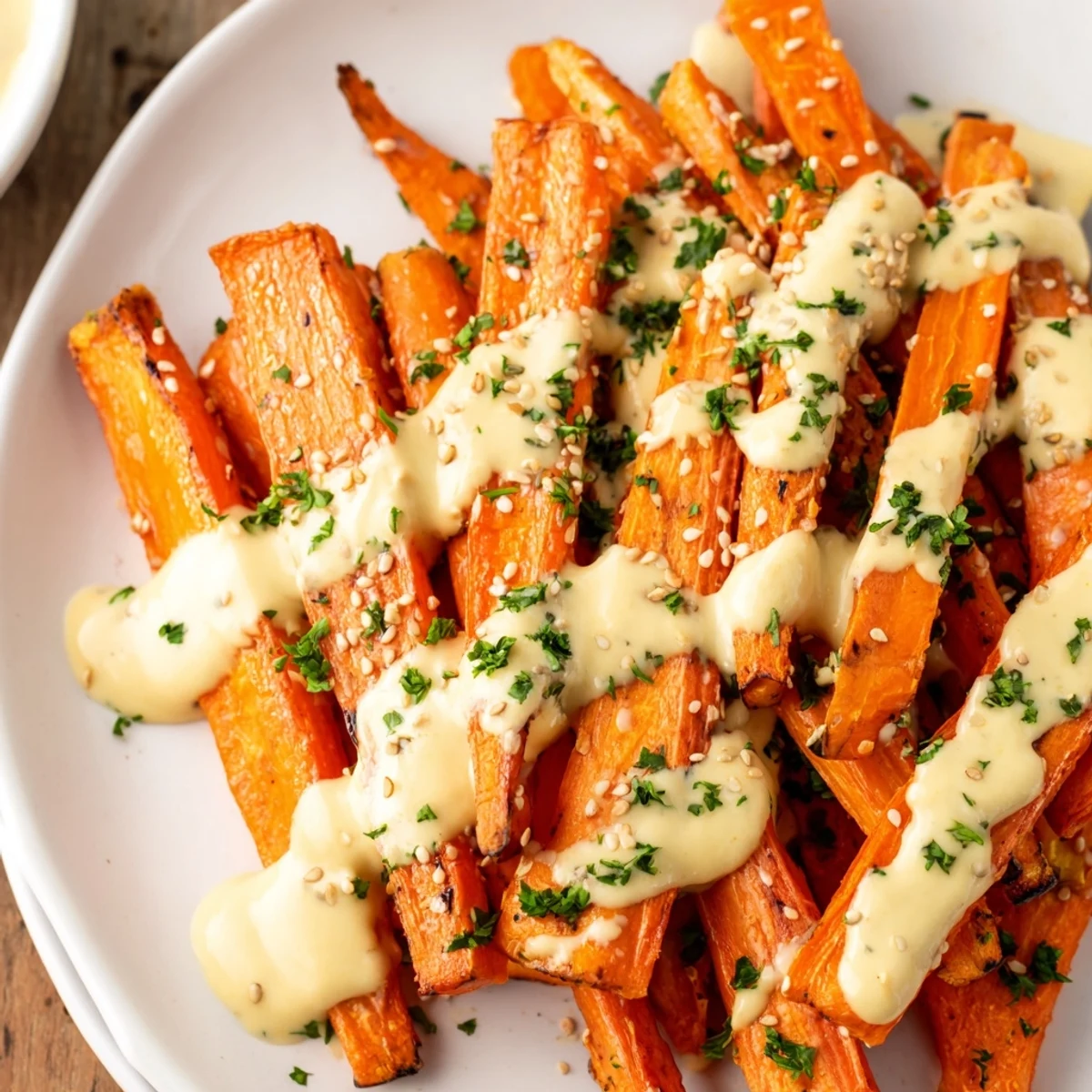
 Enjoy tender roasted carrots coated in a creamy, zesty lemon-tahini sauce. This dish comes together quickly with simple ingredients, offering a vibrant balance of flavors. Perfect for a healthy side or part of a Mediterranean spread, these roasted vegetables are finished with fresh parsley and sesame seeds for added texture.
I discovered lemon tahini sauce purely by accident—reaching for tahini when I was out of yogurt one evening, then squeezing a lemon over some roasted carrots, wondering if it would work. It absolutely did, and now I make it constantly because of how the creamy sauce transforms something as simple as roasted vegetables into something people actually ask for at dinner. There's something about the way tahini becomes silky when combined with lemon juice and a touch of garlic that feels almost luxurious for such humble ingredients.
A friend came over for lunch last spring when my garden had just started producing greens, and I roasted a tray of carrots while we were chatting. The moment I drizzled that lemon tahini sauce over the warm carrots and sprinkled fresh parsley on top, she actually stopped mid-sentence to ask what it was. That's when I realized this wasn't just a side dish—it was something that made people pause and pay attention.
Ingredients
- Carrots: Choose medium carrots and cut them into even sticks so they roast uniformly without some pieces burning while others stay firm.
- Olive oil: Good quality makes a difference here since it coats the carrots and adds subtle flavor as they caramelize.
- Tahini: This is the star—use raw tahini from a reliable source, because stale tahini can taste bitter and throw off the whole sauce.
- Lemon juice: Fresh squeezed is non-negotiable; bottled juice tastes flat and won't brighten the sauce the way real lemon does.
- Maple syrup or honey: Just a touch to balance the tartness and round out the flavors without making it sweet.
- Garlic: One small clove minced finely so it distributes evenly and doesn't overpower the delicate sauce.
Instructions
- Heat your oven and prepare the stage:
- Preheat to 425°F and line your baking sheet with parchment paper so cleanup is effortless and nothing sticks.
- Coat and arrange the carrots:
- Toss your carrot sticks with olive oil, salt, and pepper in a bowl, then spread them in a single layer on the sheet. Don't overcrowd them—they need space to caramelize, not steam.
- Roast with a midway turn:
- Slide them into the oven for 20–25 minutes, turning them once halfway through. You'll know they're ready when the edges are golden and a fork slides through easily.
- Build the sauce while carrots cook:
- Whisk tahini, lemon juice, maple syrup, minced garlic, and a pinch of salt together, then add warm water a tablespoon at a time until the sauce flows like honey. Taste and adjust—sometimes an extra squeeze of lemon makes all the difference.
- Bring everything together:
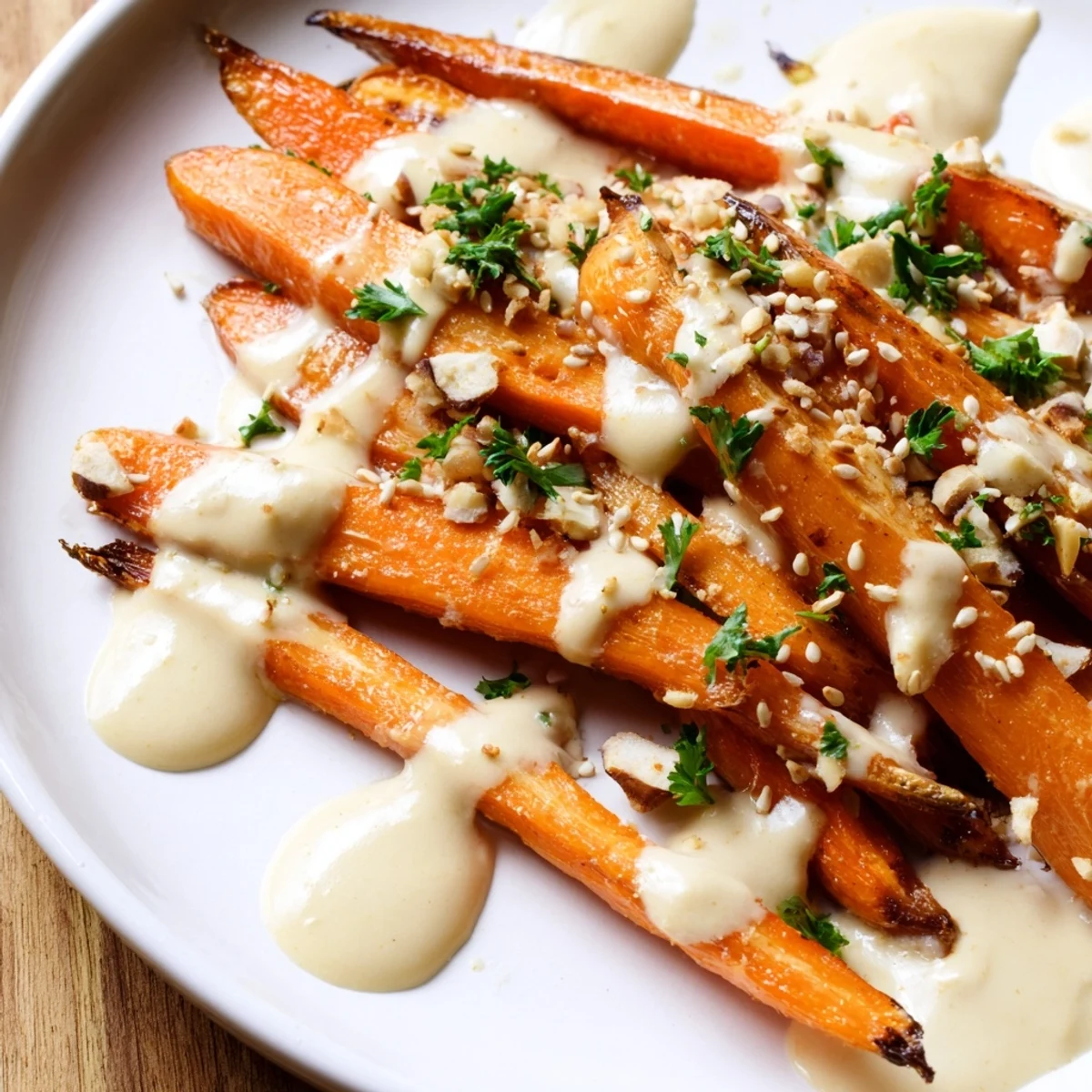
- Transfer the warm carrots to a serving platter and drizzle generously with sauce so every piece gets that creamy coating.
- Finish with color and texture:
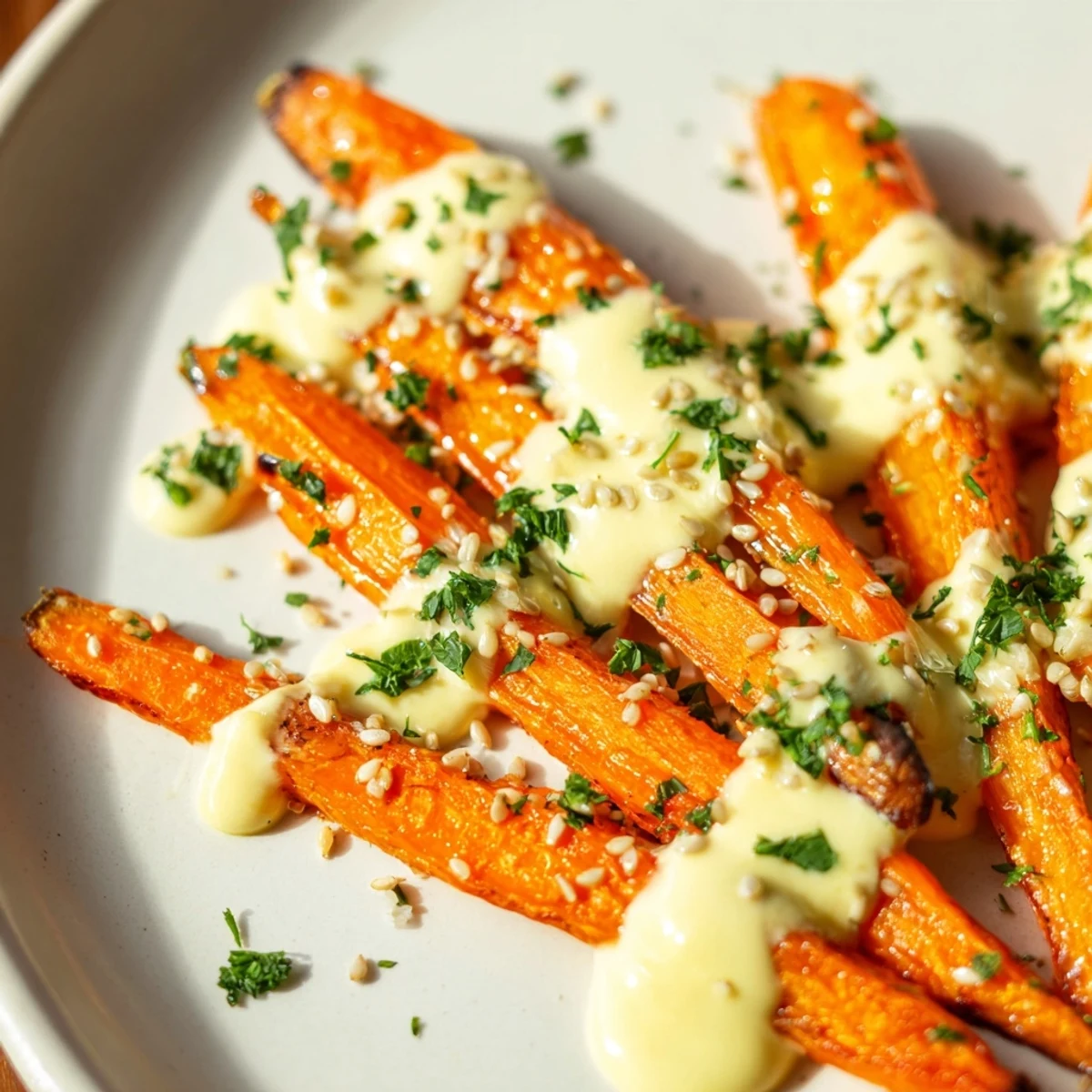
- Scatter chopped parsley and toasted sesame seeds over the top right before serving so they stay bright and crisp.
 Pin This
 The real magic happened when I served this at a potluck and watched people come back for seconds without even glancing at the expensive meat dishes. That's when I understood that sometimes the most memorable meals aren't complicated—they're just made with intention and ingredients that actually taste like themselves.
Making It Your Own
The base recipe is flexible enough to absorb your own touches without losing its identity. A pinch of cumin in the sauce adds warmth and an earthy depth that makes you feel like you've discovered something ancient and delicious. If you have access to rainbow carrots at your market, roast those instead for a plate that looks like it came from a restaurant kitchen.
Serving Suggestions That Work
These carrots shine as a side to grilled chicken or roasted lamb, but they're equally at home as part of a mezze spread alongside hummus, baba ganoush, and warm flatbread. I've also served them cold the next day as a salad-like side, and somehow the flavors get even more interesting after sitting together overnight. Room temperature or warm, they adapt to whatever's happening at your table.
Small Details That Matter
Roasting vegetables is one of those cooking techniques that rewards paying attention—your oven might run hot, or your carrots might be thicker than expected, so the first time you make this, peek at them around the 20-minute mark. Tahini quality genuinely affects the outcome, so don't grab whatever's on sale; it's worth seeking out a brand you trust. The sauce can be made up to a day ahead and stored in the fridge, then thinned with a splash of water when you're ready to serve.
- Toast your sesame seeds in a dry pan for 2–3 minutes before sprinkling them over the dish so they taste nutty and alive.
- If you're cooking for someone avoiding sesame, skip it entirely—the dish is complete without it.
- Leftover sauce keeps for about three days and works beautifully drizzled over roasted vegetables, grain bowls, or even grilled fish.
 Pin This
 These carrots have become one of those dishes I reach for when I want to feel like I've cooked something nourishing without any fuss. There's comfort in knowing something this simple tastes this good.
Recipe FAQs
- → How do I store leftovers?
-
Store cooled carrots and sauce in an airtight container in the refrigerator for up to three days.
- → Can I use baby carrots?
-
Yes, baby carrots work well. Adjust roasting time slightly as they may cook faster than large cut sticks.
- → Is this dish vegan?
-
Yes, provided you use maple syrup instead of honey in the sauce. All other ingredients are plant-based.
- → What can I serve with this?
-
It pairs excellently with grilled chicken, lamb, or as part of a larger mezze platter with hummus and pita.
- → Why is my sauce too thick?
-
Tahini thickens when mixed with acid. Simply whisk in additional warm water, one tablespoon at a time, until smooth.